Reed valve fitted peripheral intake port Wankel
Printed from: Aaron's Homepage Forum
Topic URL: http://www.aaroncake.net/forum/topic.asp?TOPIC_ID=8678
Printed on: Oct 22 2026
Topic:
Topic author: urquiola
Subject: Reed valve fitted peripheral intake port Wankel
Posted on: May 20 2010 11:26:20 AM
Message:
Hi!: as you all know, when Toyota presented the concept of air injection in exhaust port to improve Wankel performance, specially fuel economy, they added also a Reed Valve (RV) close to the trochoid surface in the peripheral intake port; peripheral intake with variable geometry intake manifold made Mazda win Le Mans endurance and fuel use race (-SAE Paper 920309 , Ritsuharu Shimizu et al.). Yanmar Diesel showed also that reed valves improved the partial load and low r.p.m. performance of their small charge-cooled rotaries (SAE Paper 720466 Kojiro Yamaoka & H. Tado), but I got a letter from David W. Garside, that developed the Norton series of Rotary engines, telling that reed valves do impair the high r.p.m. performance, an untoward fact for their engines. As street car engines don't work long times at high r.p.m., anything improving low rpm and partial load performance would be very good for the average driver. RVs do generate opening and closing extra-flows, like an hydraulic ram, that improve volumetric efficiency; also, by tilting the RV angle, you can induce any desired amount and direction of swirl inside the combustion chamber, thus regulating flame speed and engine emissions. I had the concept of installing an Husqvarna 500 cc 2-Stroke engine prismatic reed valve in a rotary with peripheral intake, to improve low speed torque, fuel economy and emissions. I send this note to see if there is anybody with the expertise and will to receive the torch of this concept, implement it and let us know the results. Regards, salud +
The added images are from Mazda SAE paper 810277, about their improvemnts in materials and engine noise reductions
Download Attachment: 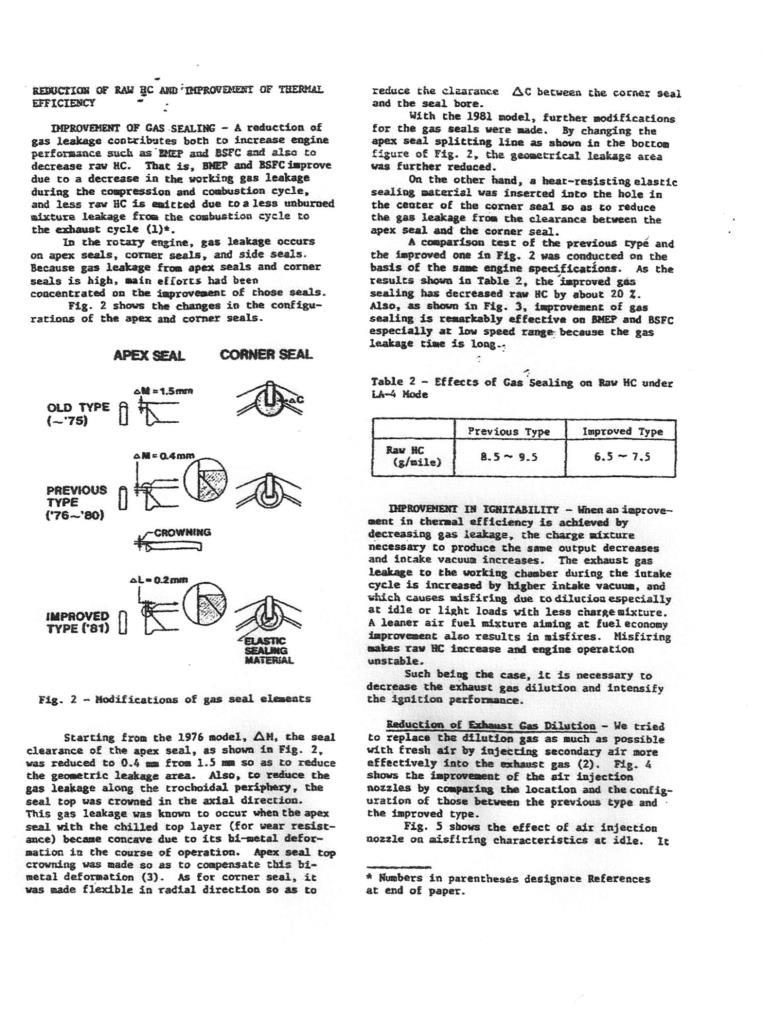 Mazda 810277 a.jpg
144.65 KB
Download Attachment: 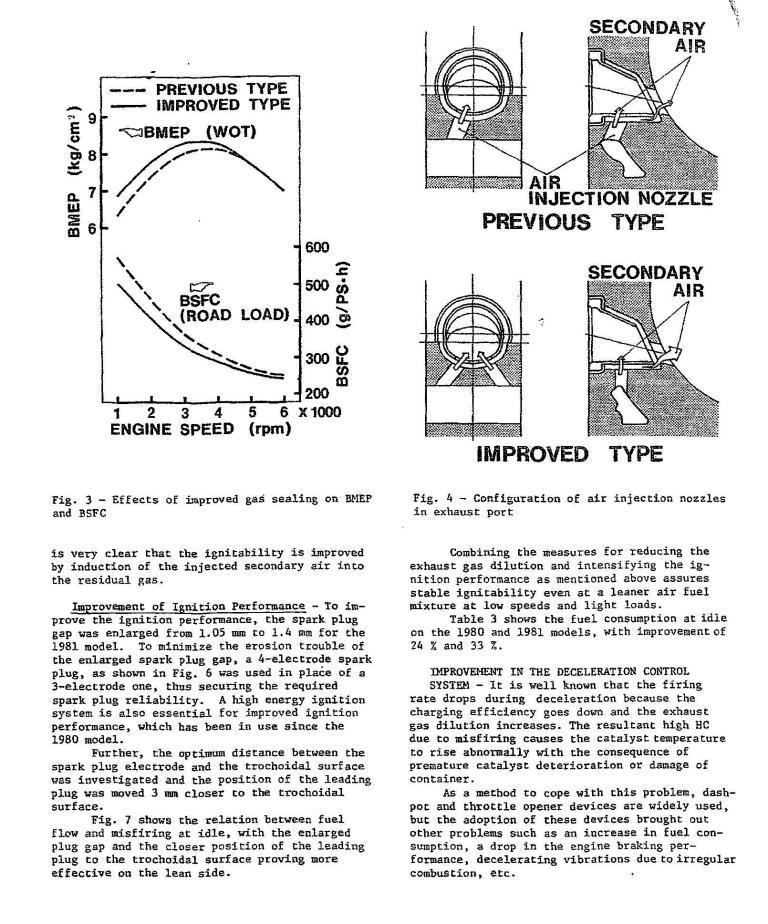 Mazda 810277 b.jpg
155.41 KB
Replies:
Reply author: Aaron Cake
Replied on: May 22 2010 11:09:58 AM
Message:
Exhaust overlap is the issue. Unless the reed was flush to the housing surface so that there was no leakage around it, then exhaust would still blow past and contaminate the intake charge.
Reply author: urquiola
Replied on: May 22 2010 3:56:26 PM
Message:
You're right, but exhaust gas entry into the admission stroke has been an inherent feature of Wankel until Renesis engine, and many reciprocating 4-stroke engines used Exhaust Gas Recirculation (EGR) to reduce NOx emissions (For example, the 1976 AMC Pacer I own). H Ricardo showed in the 20's that for every 1% of EGR in the intake mix, you get a 45º F reduction in flame temperature, and the higher the combustion temperature is, the higher the amount of NOx in exhaust is. The SAE paper by Toyota (Toshiyuki Kohno, # 790435) contains detailed calculated and measured data on a reed-valve controlled intake engine, including intake-exhaust overlap, dead space next to the intake port and Reed-Valve, and EGR.(See also SAE Paper 921444 , by Marcos Langeani, on a Wankel RCE with High Pressure Recirculation of Unburned Gases). Also, a Reed valve controlled intake port may act as a variable timing intake, always opening and closing to give the better chamber filling and volumetric efficiency. As in other engines, it's hard in a Wankel conciliating the arrangements for low speed torque and fuel economy, and a high power output with the engine raced. A Reed valve would help in having more achievements in both the bottom and high end of engine rpm range, the losses at top rpm would be negligible for automobile use, a family car or common car is not a racing motorcycle or a snowmobile. Anyway, thanks a lot for your interest, any experimental data wellcomed! Salud +
Reply author: urquiola
Replied on: May 23 2010 11:42:56 AM
Message:
I've read your personal page. May I advise you "Forbidden planet" a B series sci-fi movie from the the 50's, a cult one, and also "Liquid Sky", by Slava Tsukermann? Enjoy them. SAE papers as you know can be bought at www.sae.org for prices starting around 18 USD, no need to be a member. For a single peripheral intake port Wankel, I guess a nearly rectangular shape port will fit best, as in the Norton series of engines. I've always considered if streamlining the intersection of intake and exhaust ducts with trochoid surface will give an improvement. Streamlining port edges by grinding reduces or eliminates transition from laminar to turbulent flow, a thing linked to an increase in working fluid drag and decreased volumetric efficiency, but in the point where flow detachs from surface, stops being laminar to become turbulent, an important raise in gas pressure occurs, high pressure that sometimes can be exploited to give beneficial effects, but turbulent flow always reduce volumetric efficiency. See motor rotativo español in YouTube http://youtu.be/ziM7Cfv_wYU for another unusual engine, some additional info is in www.enginehistory.org . Salut +
Download Attachment: 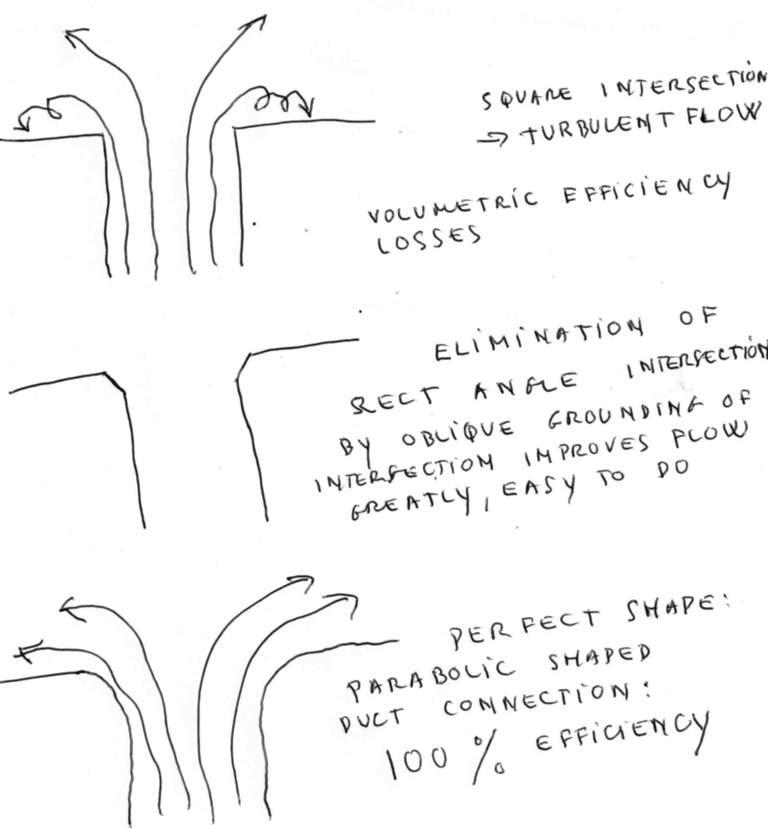 Duct shape and efficiency.jpg
49.6 KB
Reply author: Aaron Cake
Replied on: May 24 2010 09:48:21 AM
Message:
Yes, but peripheral porting increaes overlap significantly. Regardless of whether the runner itself is sealed, there is a large hole in the side of the rotor housing that leads directly from the exhaust side of the rotor to the intake side. Unless the valve closes flush to the housing surface, the high pressure exhaust side will always force gas into the low pressure intake side. A flush closing valve has other issues, such as maintaining tolerances, speed of actuation and carbon buildup.
Most of Mazda's factory PP engines did indeed have a square or D shaped peripheral port shape so that they could control the opening and closing speed of the port.
Reply author: urquiola
Replied on: May 24 2010 4:50:39 PM
Message:
Some if not most of EGR in peripheral porting comes from low intake pressures during part load or low rpm functioning, the exhaust gas pressure being higher, burned gas goes up the intake ducts, charge is poor, and misfirings can also result. A reed valve prevents most of this, while there is always some dead space thru which EGR can happen, the Toyota paper quantifies it. Yes, overlapping may be a disadvantage, but probably the overall result will be good, as Peripheral Porting produces much higher Mean Effective Pressure (MEP), and higher MEP gives better Specific Fuel Consumption (SFC) (SAE Paper 680572, H Keller). I guess that in some Peripheral Ported (PP) engines, a more than noticeable flow of exhaust gas reached the intake manifold and continued its way up in the actual working conditions. The issue is that Mazda won the Le Mans race with peripheral ports, and for me a single R-V controlled PP would be worth testing in a car engine, maybe just small additional peripheral porting for idle, as in Suzuki RE-5 would be of help (SAE Paper 770190; Shigeyasu Kamiya et S. Shirasagi) The Norton rotaries (SAE Paper 821068; D W Garside) as well as the Suzuki RE-5 used a gas throttle very close to the trochoid surface (Throttles are usually placed in the carburetor itself, you know this), thus throttle acted in fact in these PP RCEs (Rotary Combustion Engines) as a R-V or a non-return valve would, mainly under not full-throttle operation. What about peripheral intake port (An R-V controlled port would go better) plus side exhaust ports?. I don't know if this has ever been tested, but sounds good. Some of the early Wankel engines of NSU had side intake and side exhaust ports, as in the Rx 8 Renesis engine, but they tended to have problems of carbon accumulation and thermal distortions. Mazda solved the carbon deposits buildup by adding an scraper seal in the sides of rotor, and the rest by adding ceramic parts and other changes I'm not aware of. Do you have experiences you want to share about duct and port streamlining or polishing? Thanks, Salut +
Reply author: Aaron Cake
Replied on: May 30 2010 10:36:52 AM
Message:
Then test it. 
And you'll find that unless you can seal the peripheral port flush with the rotor housing surface, the overlap will be significant.
Reply author: urquiola
Replied on: Jun 02 2010 1:06:58 PM
Message:
That's the reason why I wrote in the forum, I have no mechanical expertise, repairshop or machining facilities to do it by myself, and third party work costs are well above my reach, so I try to convince others to do the job and let all of us know the results. With the exception of Renesis engines (See SAE Paper 2004-01-1790, Masaki Ohkubo et al.), there was always some overlap between intake and exhaust strokes and ports in rotaries, but overlap is a deliberately wanted feature of high speed reciprocating engines, to improve volumetric efficiency at high r.p.m. A lot of overlap is harmful, but some can be tolerable. I've realized in your YouTube video on restoring a Cosmo Rx-5 that you're already implementing duct and port streamlining, so the idea was not bad. There are also several alternatives to all-liquid cooling.( SAE Paper 900035, D Eiermann et al.) If somebody accepts my request, please let us know. Regards, salud +
Reply author: urquiola
Replied on: Jun 03 2010 09:49:52 AM
Message:
Hello again! (A nice videoclip by Andy Warhol on "The Cars" song): peripheral porting always involve some geometrical intake and exhaust ports and timing overlap, but the functional or breathing overlap caused by this is reduced, if not eliminated in its negative consequences, by the decrease in dead space and non-return flow control implemented by the reed-valve. Flow of unburnt gas from intake port to exhaust because of port overlap is one of the reasons of high fuel use, high unburned hydrocarbon emissions and high exhaust temperatures under some rpm and load conditions in Wankel engines, (SAE Paper 890212 , C Kappos & S Rajan and 880628 by T Chen) but reed-valving may help in correcting this too. Early 20th century reciprocating engines had high exhaust temperatures, a consequence among other things of the very low compression ratio the existing gasolines allowed, it was not until the work by Harry Ricardo that the reasons for detonation were discovered, and ways to control it were developed, such as the now defunkt leaded gasoline. Please try R-Vs!
Reply author: urquiola
Replied on: Jun 04 2010 10:48:12 AM
Message:
I forgot to say, that a way to avoid the negative consequences of port overlapping, while preserving the MEP and other performance advantages of peripheral porting, is having a peripheral, reed-valve controlled, rectangular intake port, and side exhaust ports, as in the exhaust ports of Renesis engine. Side exhaust porting was used early in Wankel development, but the build-up of carbon deposits and other problems (Thermal distorsion,...), solved in the RX-8 engine by new side seals, impeded its generalization. By the way: I remember reading in a rotary engine company webpage, BDC motorsports I guess, interest on the Nickasil coverage for trochoid surface. This coverage was invented elsewhere, and the resulting surface had some kind of roughness as to retain the lubrication oil film, and also low wear and good compatibility with apex seals of an adequate long duration. The patents by Citroën (or Rolls-Royce, or Mercedes ?) can be downloaded for free from several patent offices around the world, as they have expired; it just takes some time to find the right patent among all patents owned by Automobiles Andre Citroën (Try friction or rub surface as search word, or www.oepm.es pats # 0374366 and 0375053 , or the worldwide patent database ESPACENET), and also the canadian patents from Grazen, Alfred P, describing the housing working surface layer used in the Suzuki RE-5 (CA 602098 and CA 651826), that allowed employing new Ferrotic alloy apex seals (SAE Paper 741043 H D Lamping et al), and gave an engine life of more than 250000 km, are of free download. There is an spanish motorcycle company, Derbi, several times World Champion in small engines bykes, now owned by an italian firma, that was applying Nikasil, I don't know if they do it currently, in their reciprocating engines cylinder inner coating, it can't be difficult to contact them, many people can help you as translators if you're in trouble. Some new developments for cylinder wall treatment, easier to apply and cheaper than the ones used in the OMC engines (SAE Paper 730119 H M Ward, III et al.; SAE Paper 740147 , V Meringolo & F N Longo) for example, that in theory can be useful for rotaries, were recently published in SAE papers (2008-01-1050: K.Bobzin et al, Germany: Thermal Spraying of Nano-Crystalline Coatings for Al-Cylinder Bores). The Nikasil coating was developed, I'm not sure, by Rolls-Royce or Mercedes-Benz, and the good feature in this product is that it gives a strong, durable sliding path for the apex seals, and as it's somehow porous or not fully flat, it allows the lubricating oil film to stay and keep the engine away from becoming stuck or wearing too fast. A suggestion: never,never race a Rotary engine under no-load conditions: it can simply blow away. Enjoy it all. Salud +
Reply author: Aaron Cake
Replied on: Jun 06 2010 10:40:15 AM
Message:
In all honesty, I'm not going to try it. I'm not willing to spend money on machining costs and a month or so of R&D on something that I know won't work. I also don't really see the advantages. I can take a zero overlap side-port rotary, strap a turbo onto it, and make more power then a peripheral ported rotary anyway.
I still don't see how a reed valve would stop or even limit exhaust overlap. A reed valve must open towards the flow, so there would still need to be a huge dead space through which high pressure exhaust will force its way into the intake charge. There won't be a functional difference between an engine without a reed valve. This has been tried before.
Reply author: urquiola
Replied on: Jun 06 2010 2:37:10 PM
Message:
Peripheral porting gives a much more higher mean effective pressure than side porting, and a high MEP is one of the good features for high output and good fuel economy; the main advantage for side intake porting is a more stable idling and some better part load and low rpm performance, plus the avoidance of bad overlap, there is no problem for overlap, just the EGR and unburnt mixture scape thru exhaust port are the problems, but this is also the advantage of reed-valving: you keep the better MEP throughout the whole rpm span, and regain most if not all of the side port non-overlap and part load features. Also the opening and closing of valve may generate extra flows, a thing used with liquids for what is called hydraulic ram. As many of the peripheral intake porting problems are connected to the reverse flow of gases to intake manifold, and short-circuiting of unburnt air-fuel mixture to exhaust port, the combination of a peripheral, reed-valve controlled intake port, and simultaneously a side exhaust port,would have both the high MEP of peripheral porting and the absence of or minimal overlap of side intake and side exhaust porting of the Renesis engines. The question of turbo-charging is addressed at SAE Paper 900036, by I Matsuda et al. as you know. (Data on exhaust gases behaviour appear in SAE Paper 930681, Y Hamai & E Outa ). As I've tryed for years to involve somebody in this project, with no success at all, I'm not surprised that you all don't like wasting your time, money and expertise on such an apparently foolish idea. Anyway, I'm very grateful to you for giving me the opportunity to spread the concept. Should you ever change your mind, please let me know, you can look for me here, and searching for jgrosay, the nickname I use in Wikipedia , NY Times, Amazon, and SciAm. Nice summer, take care of mosquitos!. Salut +
Reply author: Aaron Cake
Replied on: Jun 07 2010 09:44:52 AM
Message:
I never said the idea was foolish, just that it wouldn't work. Very rarely do I say that an idea is foolish.
Here is a diagram that I created to explain the issue of overlap. It sucks, but I did it in about 5 minutes in MS Paint. I have an engine simulator application that allows me to run a rotary at any RPM and position to determine timings. Note that I just guessed on the location of the ports to illustrate the point, don't take this diagram as actual peripheral port timing.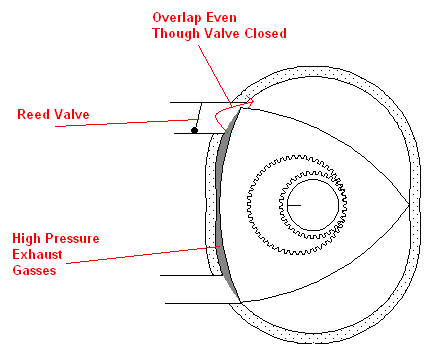
As you can see, even with a (poorly drawn) reed valve, there is still ample space for the port to allow exhaust gasses through. By the nature of the reed valve, it needs to be a certain distance from the port so that it has room to open. Unless some kind of electrically/hydraulically actuated reed valve is used that can open the opposite way, but that seems unlikely. Exhaust gas pressures in this area aren't trivial, they are many times higher then intake pressures.
Rotary and "fuel economy" really don't belong together. It is very hard to get decent fuel economy, not due to porting, but due to the long and weirdly shaped combustion chamber.
Reply author: boron
Replied on: Jun 07 2010 5:21:05 PM
Message:
Man I love MS Paint. It's not really that bad a drawing btw.
Reply author: urquiola
Replied on: Jun 07 2010 5:47:46 PM
Message:
You may be right, I may be crazy (1), but: what about my last proposal, a peripheral intake port and side exhaust ports?. Most early Mazda engines had side intake and peripheral exhaust, the overlap was minimal. It's just putting the type of ports upside down, boy you turn it...(2). C Jones in SAE paper 770044 tells about having made an engine turn backwards to test the peripheral intake with side exhaust configuration, but this concept, and the concept of putting intake and exhaust zones upside down involves the risk that, as the flow of cooling fluid is set for a precise location and amount of heat transferred from the rotor chamber to the housing and then to the cooling system, having thermal distorsions that will give poor emissions and SFC features, that wouldn't have taken place in an engine designed from the start for peripheral intake and side exhaust. Some engines, specially with direct injection systems, meet the problem of fuel droplets blocking access of the fuel spray to air, but with specially arranged deflectors, I remember one of these, (Pat DE2732562 by J M Ganzenmuller Sanchez), or with the incoming air duct tilted in a not paralel angle to the main chamber axis, with the aim of having the air or the air-fuel mix turning and spinning and swirling at desired speed and turbulence inside the working chamber, may in theory be an approach for some difficulties. There are some recent comments on the issue of combustion chamber shape and thermal losses, maintaining that is was not so bad as expected, look at the Ingersoll-Rand 44 liters chamber displacement gas fueled engines, that had a lower fuel use than reciprocating counterparts. Curtiss-Wright has shown that rotors can be widened (SAE Paper 790621, Charles Jones), so reaching a more square combustion chamber shape; the problem remains in seal efficacy at low rpm, that was addressed by several by changes in seals (Spanish patent 0418430 by Automobiles A Citroën).
(SAE Papers 730117, M K Eberle & E D Klomp; 730118 ,H F Prasse et al.) Another paper: 870447, J F Mannisto & R Bazaz covers rotor structural analysis. Very nice forum, very nice people! Thanks, Salut +
(1) Billy Joel (2) Diana Ross
Reply author: Aaron Cake
Replied on: Jun 07 2010 7:03:58 PM
Message:
I would suspect that peripheral intake and side exhaust ports would act the same way as a peripheral exhaust and side intake. It may actually be a little worse. With side exhaust ports large enough to flow enough gas (like the Renesis), there may be more overlap then with a peripheral port exhaust and side intakes. I'm just having a hard time rotating it all in my head to get a clear idea of what happens.
Mazda went with peripheral exhaust and side intake ports on all their production rotarys because they found it as an acceptable compromise until the Renesis came out. Actually, in the later years, the bit of overlap caused was not a big deal. They eliminated EGR as a result of it.
Wider rotors have been tried, but even Mazda is going back to thinner rotors with the new 16X rotary (which they say will run on gasoline, hydrogen, diesel and E85). Remember, the wider you go with the rotors, the lazier the engine is and the harder it is to make apex seals that won't flex.
This is just my personal opinion, but chasing piston like characteristics and fuel economy in a rotary just seems backwards. Build a rotary like a rotary should be built; to emphasize it's natural powerband.
Reply author: urquiola
Replied on: Jun 08 2010 08:52:36 AM
Message:
I guess I'm approaching my incompetence level, as I can't offer nothing more than speculations, sorry no mechanical abilities at all. Some degree of exhaust gas recirculation is probably inevitable in rotaries, but this doesn't need to be specially negative for the overall engine performance, and any degree of backflow of exhaust gas into the intake manifold or duct, that took place in some peripheral intake peripheral exhaust rotaries is a much more catatrophic event, that can be fully eliminated with a reed-valve, acting as an unsurmontable wall for backflow. A very small amount of exhaust gas taken into the next cycle or recirculated, the wording you prefer, can be regarded as no recirculation at all, if it doesn't reach the amount that produces misfirings - or 1 ignition in 3 turns functioning -, that was seen early in the development of Wankel engine. (About the flexion of seals, SAE Paper 840035 by J Knoll et al.,seems to deal with the subject; regarding the shape, number and placement of ports, and shape of duct-chamber edge, the book by R.F. Ansdale, Iliffe, 1968, The Wankel RC Engine Design and Performance, pp 14,15 & 85, contains a detailed discussion of all this, and also a diagram on the degree of port overlap that is currently used in the Renesis engine). See you later...
Reply author: urquiola
Replied on: Jul 22 2010 11:50:51 AM
Message:
Attached please find a hand sketch of my concept of peripheral intake side exhaust RCE. (Sorry, don't know how to use MS Paint) If you simulate it, you'll notice that overlap is minimal to nil, and that prismatic reed-valve greatly decreases EGR at part load, low rprm, and that the increase in MEP it gives improves sealing,emissions and fuel use. Maybe Renesis has a similar practical fuel use as RX7, but it is much more powerful. We all would greatly appreciate you letting us know the reference on the RCE simulation application you have, it will give all of us lots of fun!. Salud +
Download Attachment:  Periph int side exh Wankel RCE 2.jpg
56.81 KB
Reply author: Aaron Cake
Replied on: Jul 25 2010 10:43:20 AM
Message:
But without the peripheral exhaust ports, the peripheral intake ports don't have nearly as great an advantage. Without that high RPM overlap, high RPM power drops off greatly.
Reply author: urquiola
Replied on: Jul 26 2010 06:12:16 AM
Message:
Well, power drops very little at high rpm, you can look at the Yanmar Diesel RCE data. Wankel was a highway, high rpm engine, its good zone started at 3'000 rpm, it is less well adapted to city or low rpm driving, and that is the regime where Reed Valve can be an advantage. With a HighWay speed limit of 55 mph, an engine able to give 230 Kw and run at 8'000 rpm is most of time underused and in its bad performance range. If you open up the intake port early in the cycle, you gain in low rpm torque and engine driveability, such in a truck engine. Low rpm power tuned engines use long intake ducts; for high speed power, ducts must be shortest as possible; ducts are also tuned for resonating waves reaching a high pressure point close to the intake port opening, to improve engine filling. The Peripheral Port advantage is a higher Mean Effective Pressure throughout the whole rpm range. Thanks, salud +
Reply author: Aaron Cake
Replied on: Aug 19 2010 09:22:47 AM
Message:
True enough. But consider this: by just using a regular side port engine (with or without peripheral exhaust ports), overlap can be kept to a minimum at all RPM ranges. Then a small turbocharger (such as a GT30R) can be used which will provide response from 1500RPM until about 7500 RPM, put down 300HP/300 FT-LBs and maintain easy low load driving due to conservative porting.
I think the NA rotary was great in it's day, but today the rotary can't compete without forced induction. Which is fine with me, because the rotary is perfectly suited to turbocharging.
Reply author: Aaron Cake
Replied on: Aug 29 2010 10:53:13 AM
Message:
Something is weird here. The index shows the original poster replied today at 5AM, yet his reply isn't here...
TESTING
Reply author: urquiola
Replied on: Sep 01 2010 03:47:36 AM
Message:
What I added were changes in the first entry on the subject, now deleted, perhaps it was a mouse mistake.... If you deem appropiate, you can delete this. By the way: Are you aware of somebody that can install a Norton rotor (already bought) in a Sachs air cooled engine from an Hércules / DKW W-2000 Motorcycle? Some dynamic balancing is needed, as the weight of Norton rotor, that has cooling fins, is heavier than the original Sachs rotor. The resulting engine would be installed in a Citroen A series car (see www.mcda.com ) whose air cooled flat-twin engine has the same displacement and turns in the same direction as the Sachs KC 24 engine. Rules here are very strict, it's extremely difficult having an approval for installing a turbo or other major changes in an existing car or engine, if you want to continue using it legally on streets or roads. On the overlap subject, some exhaust gas recirculation (EGR) is unavoidable, as the combustion pocket or recess in the rotor always has some burnt gases at the beginning of admission stroke; the kind of EGR you can expect from a RV system is probably not much greater than this, and for sure, can be computed and assessed. Exhaust Gas Recirculation was a way used in reciprocating engines to reduce NOx emissions, I discussed this before.
Reply author: urquiola
Replied on: Oct 02 2010 11:09:10 AM
Message:
In the magazine Popular Science, year 1974, you can find lots of interesting things related to the development of RCE by several automakers, most of them from Jan P. Norby, a very good expert and historian on the subject; in the same magazine Jan 1967 issue, some rotary engine alternatives to Wankel are described. Anybody knowing the reason why Mazda changed from LDR rotor recess in 1972 or so, to an MDR recess later on ?. Perhaps just production costs and number of machining operations ?
Salut to you all +!
Reply author: urquiola
Replied on: Oct 03 2010 03:36:13 AM
Message:
The german automaker Audi exhibited in an auto show an experimental electric version of his A1, named A1 e-tron. This car has an electric engine and a battery, can go for 50 km, and an small Wankel engine, 245 cc in displacement, to charge the battery and extend the range up to 200 km. There's no drawing of the engine, but they state that it is a single port engine. The concept that comes into my mind is a port, with a movable gate, that opens the port to the intake or exhaust ducts, depending on the phase of cycle the engine is. If it is so, is an idea that I like. Nobody knows if the AudiA1 e-tron car will be ever mass produced. Anybody knowing more about this engine ?. Salut +
Reply author: Aaron Cake
Replied on: Oct 09 2010 10:35:02 AM
Message:
Mazda has used a similar system in their R26B race engine, and something a little simpler in the 2nd gen NA engine (aux ports, then VDI in '89+), then finally a 3 stage variable intake in the Renesis.
Reply author: urquiola
Replied on: Jan 08 2011 5:10:28 PM
Message:
I guess the variable intake tubing in the Mazda car that won the Le Mans 24h race was something like a trombone, a short distance tubing from fuel injector to intake port was used to give the best HP at high r.p.m., and a long one to give more torque in the low rotation speed range. Should any of you become aware of somebody implementing the kind of porting I proposed, please let us know !. Happy year 2011, thanks,
salut +
Reply author: urquiola
Replied on: Jan 29 2011 07:21:23 AM
Message:
Attached please find a picture of the Husqvarna Reed Valve
Download Attachment: 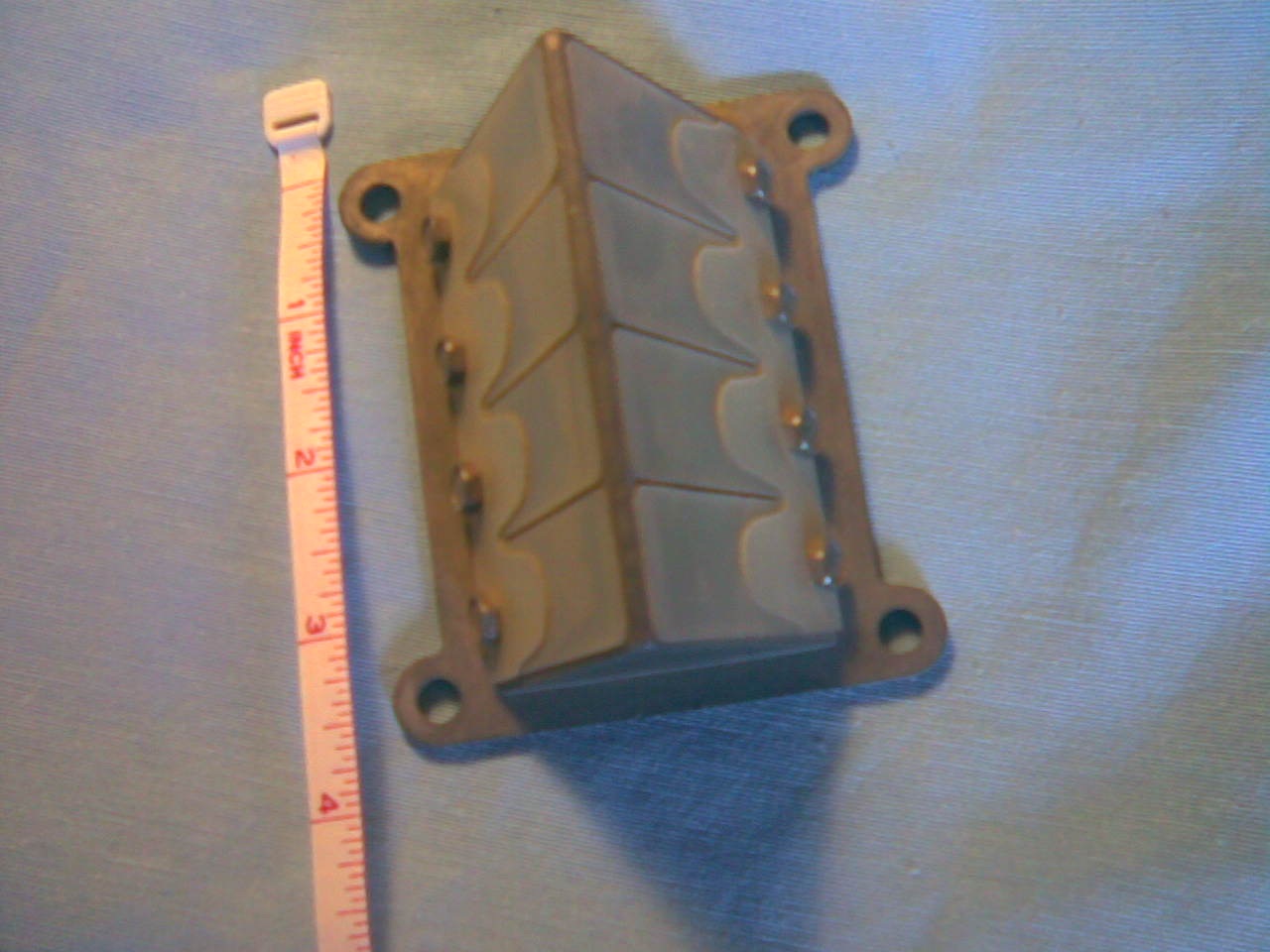 Husqvarna Reed Valve.jpg
202.25 KB
Reply author: urquiola
Replied on: Jan 29 2011 07:32:51 AM
Message:
This is the side view
Download Attachment: 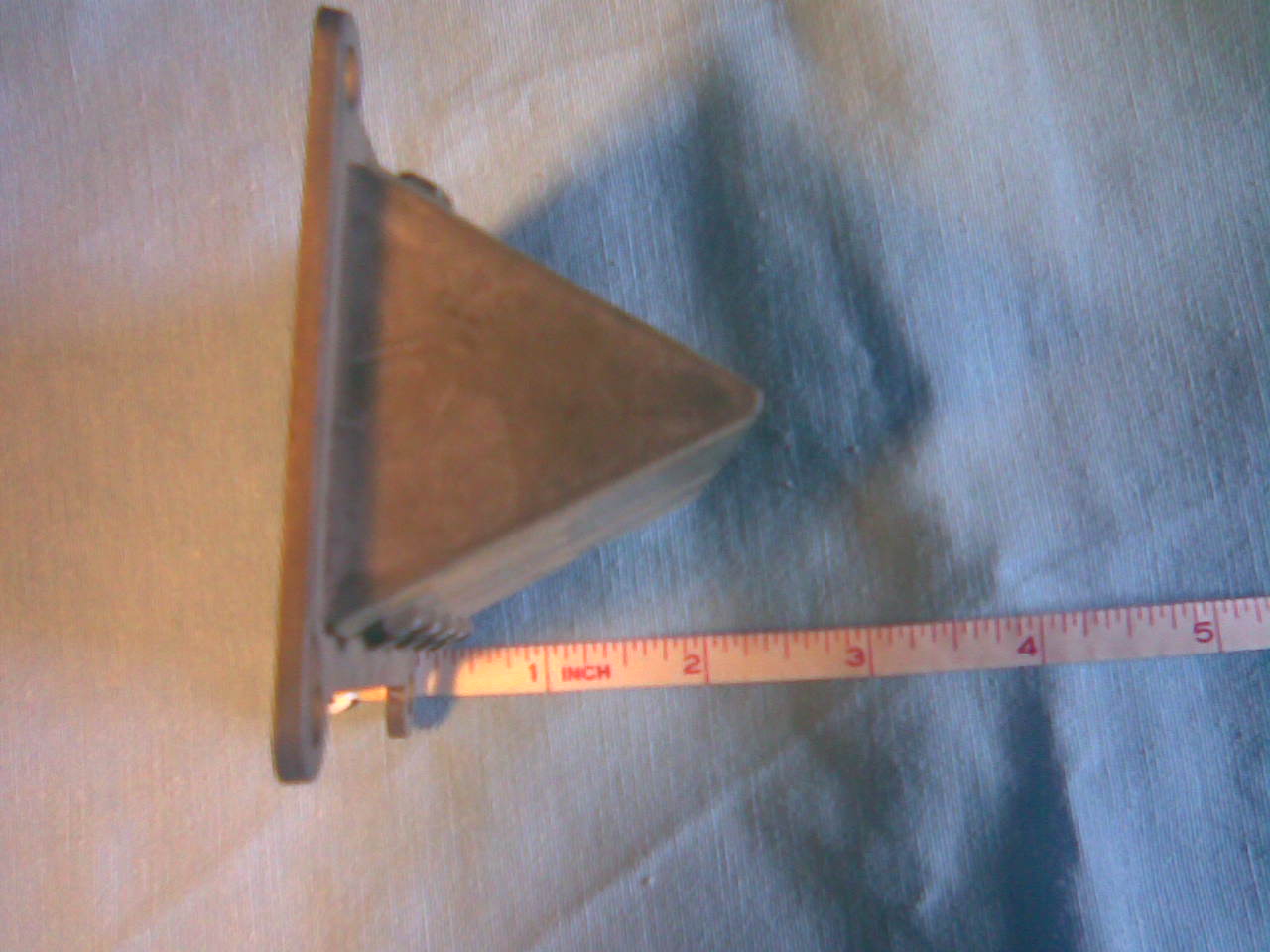 H R-V Side View.jpg
107.73 KB
Reply author: Aaron Cake
Replied on: Jan 29 2011 10:19:40 AM
Message:
That's a nice reed valve.
Reply author: urquiola
Replied on: Nov 04 2011 5:57:06 PM
Message:
Mazda announced they will shut their Rotary Engine production line the next year 2012, after building 1'000 units of the new and, we hope not, final Rx 7. The britons started collecting money from the public some years ago to keep flying the last Delta Wing Avro Vulcan bomber. Anybody starting to emit shares or anything to buy the Rotary Engine line from Mazda, and thus having the Wankel engine alive ? We are many in having lots of fun from these engines, just a good management is needed. Aaron, how do you see yourself as an engine producer in the name of all Rotary Enthousiasts ?. Salut +
Reply author: Aaron Cake
Replied on: Nov 05 2011 10:14:44 AM
Message:
I believe you are referring to the RX-8. They ended the model and said that the last remaining units (about 1000) are the last ones. Once gone, no more RX-8.
Mazda continues to develop the rotary, now working on their Skyactiv rotary.
Reply author: urquiola
Replied on: Nov 10 2011 08:44:36 AM
Message:
It seems Mazda discontinued sales of RX-8 in Europe, as the regulatory authorities there thought the car didn't comply with the anti-pollution rules, it just emmited too much CO2 for their taste; I don't know if this can change in the future. Somebody has implemented the reed-valve controlled peripheral intake port ? It will be good knowing the results, as I pointed early, I have no mechanical expertise nor a repair shop where this can be tested. Salut +
Reply author: urquiola
Replied on: Mar 24 2012 5:38:58 PM
Message:
Hi !: regarding the concept of a double use intake-exhaust single port for Wankel Rotary Engines, I've found a SAE paper: 920779, by D W Blundell and M H Sandford, about the Lotus research in Two Stroke Engines, that depicts a practical rotary valve approach to the concept of a single port used for stratified charging of engines, that may be considered for use in controlling a port acting in both intake and exhaust; such a rotary-valved single-port arrangement may probably be good for city and low r.p.m. use of rotaries. Sorry, I can't draw an image of it, and the paper is copyrighted. Enjoy it for 23 $ or so from www.sae.org . Salut +
Reply author: jakevettori
Replied on: Apr 03 2012 9:12:19 PM
Message:
"It seems Mazda discontinued sales of RX-8 in Europe, as the regulatory authorities there thought the car didn't comply with the anti-pollution rules, it just emmited too much CO2 for them; I don't know if this can change in the future. Somebody has implemented the reed-valve controlled peripheral intake port ?. It will be good knowing the results, as I pointed early, I have no mechanical expertise nor a repair shop where this can be tested. Salut +"
i agree....
Reply author: Aaron Cake
Replied on: Apr 07 2012 10:20:02 AM
Message:
It's getting harder and harder for Mazda to keep building rotarys that are competitive with piston engines for fuel economy at the same power level. In the past it was easier, because piston engines just weren't making the kind of power they are now for their displacement. But with continuously variable valve timing, direct injection and all the other improvements, we have 2.4 litre piston engines making 200+ horsepower while still getting 35MPG city, 40MPG highway. Mazda can't compete in this market even though they are making more power with less displacement, no one cares because you're stuck at 18 - 25 MPG in the city.
It's really too bad. While very mechanically efficient, the rotary isn't thermally efficient. Just a nature of the shape of combustion. Now Mazda says the new Skyactiv 16X makes huge improvements, but until anyone sees it, it's all just hot air.
The application of the rotary is the high revving sports car, where lightness and power are important while fuel economy isn't so much. The problem is, there doesn't seem to be much of a market for the traditional sports car in North America.
Reply author: urquiola
Replied on: Apr 07 2012 4:18:30 PM
Message:
I discussed this before, but David W Garside, the engineer that developed the Norton Wankel rotary engine line, line that gave origin to the Mid-West aeroengines and Diamond Engines aircraft rotary engines, claimed having fully solved the problem of elasticity in the Wankel engine, being able to design engines that either gave all its power at low r.p.m., or when raced as the usual rotaries. When he discontinued his work on Wankel engines because, some say this, Lonrho moved the money assigned to the Norton projects to other different businesses, D W Garside said he would have preferred as end of job compensation all data from his work on Wankel engines done at Norton, instead of money. Don't know if he can be contacted to comment more on this, may be thru SAE. The Garside's work is from the 70's, he may be retired long ago. Salut +
Reply author: Aaron Cake
Replied on: Apr 08 2012 10:25:08 AM
Message:
I'll see how if I can find the SAE paper. It might be on the rotary aviation site, which I can't remember the address or real name for at the moment.
Reply author: urquiola
Replied on: Apr 08 2012 1:12:38 PM
Message:
Hi Aaron!: thank you for your continued attention. The SAE paper by D W Garside describes his early work in Norton rotaries, but his comments about elasticity are from a later publication telling about an interview with him, not from a SAE paper, as far as I remember. SAE papers as you know can be bought and downloaded or ordered to be received by mail from www.sae.org . An spanish top Wankel expert is the one who told me about Lonrho decapitalizing Norton and its rotary engines line to invest the money elsewhere. I can give you his address in a private way if you wish, you have my e-mail address. Regards, salut +
Reply author: lustermage
Replied on: Apr 08 2012 7:33:47 PM
Message:
So its ok mazda stopped making rotary engines cuz fuel economy, but they dont say anything when new dodge viper launched with 8.4L!.
are they ... kiddin me. How hipocrite and biased they are.
Reply author: Aaron Cake
Replied on: Apr 14 2012 10:43:16 AM
Message:
However, the Viper likely meets all North American emissions standards. It's getting harder for Mazda to overcome the combustion shape of the rotary to meet emissions. In the same sense, people expect an 8.4 litre engine to get 10 MPG, but they do not expect a 1.3 litre engine to get 20 MPG.
Reply author: urquiola
Replied on: May 15 2012 10:51:13 PM
Message:
Hi !: coming back to the subject of intake-exhaust overlap, that I keep on thinking it's of very low amount and with no importance in the proposed reed-valve controlled peripheral intake side exhaust Wankel engine, and also to the related subject of Exhaust Gas Recirculation, SAE paper 865033 by S. Velnovic in Kragujevac, et al. reported having obtained a 10% better fuel economy and reduced exhaust toxicity by introducing exhausts into carburettor emision pipe, and there are several patents on devices that were actually put in the market, that allow heating the gasoline by making it circulate thru a tube surrounded by a sleeve where hot engine cooling fluid circulates counterwise the fuel flow direction. This is feasible as long as care is taken not to reach the range of gasoline temperatures where vapor lock begins being a problem, and is an approach that was implemented with success in a jet training airplane built in Poland long time ago, the Iskra.
Reply author: Aaron Cake
Replied on: May 19 2012 10:45:54 AM
Message:
"Hot vapor" systems were popular in the 70s/80s for a while. Manufacturers experimented with them but found fuel injection to be far less complicated and more effective.
Reply author: urquiola
Replied on: May 25 2012 3:37:20 PM
Message:
Hi!: I don't know the meaning of the expression "Hot vapor systems", and it reminds me the "Vapor lock"; the reference posted was just about a little bit of heating the gasoline immediatly before the formation of the air-fuel mix, fuel heating done by making gasoline circulate thru a tube surrounded by a flow of hot water coming from the engine cooling system, I don't know if we speak about the same thing. In automotive ENGINEERING international, May 16, 2012 issue, a note appears on the Ford's (A long time partner of Mazda, they also conducted research on RCEs) ecoBoost engines that get a 15% fuel economy improvement by using cooled EGR. Intake-exhaust overlap and Exhaust Gas Recirculation may not necessarily be bad!. Salut +
Reply author: Aaron Cake
Replied on: May 27 2012 10:48:07 AM
Message:
Yes, that's what in North America they referred to as "hot vapor". Several famous people were involved in manufacture of these systems (including Carrol Shelby) but they all relied on antiquated carburetors and complicated heating systems. Fuel injection was much simpler, more reliable, and ultimately obviously the choice. Up until a few years ago I still saw adds for "hot vapor" conversions.
Cooled EGR is becoming very common. I believe the Prius was the first well known car to use cooled EGR. My Insight relies heavily on precisely controlled EGR to maintain lean burn. The only problem with this is that there is an EGR plate between the intake manifold and head that tends to clog up as the EGR cools on the way through. Mine is due for another cleaning.
Reply author: urquiola
Replied on: Jun 28 2012 3:33:38 PM
Message:
Hi!: this is the sketch for the two fuel economizers described in the text, A is to induce swirl in the incoming air or mix entering the intake manifold, to improve homogeneity of mix and obtain a better combustion, and B is to heat fuel before entering the carburettor or the injection system, if the injection system doesn't have already something like this incorporated, as hotter fuel is better vaporized, obtaining a more complete combustion, and reducing exhaust emissions. Fuel injection was then very complex and very expensive, only luxury cars installed it, but as a result of the demand on fuel economy and emissions improvements, today even cheap cars mount EFI. The economizers in the images below are really oldies in the field of patented gadgets!
Download Attachment: 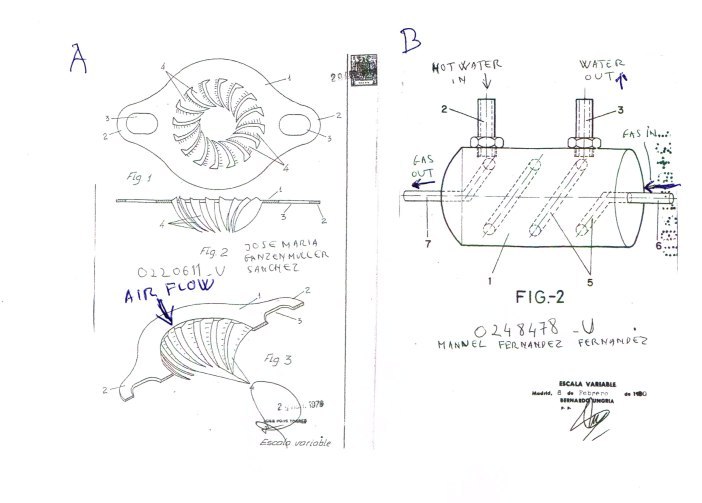 Fuel economizers.jpg
49.82 KB
Reply author: Aaron Cake
Replied on: Jun 30 2012 10:55:52 AM
Message:
Yeah, the swirl generators have been around for a long time and are even still sold under names like the "Tornado", "Fuel Genie" and others. There was some benefit in some cases with older carbureted vehicles as the swirl would mix the A/F mixture a bit better. However now it's really nothing but a scam. EFI manifolds are carefully designed for as smooth an air path as possible and to use effects like Helmholtz resonation to work with the pulses caused by opening and closing valves/ports to cram more air into other cylinders/rotors. Combine this with sequential timed injection and more and more engines going to direct injection with charge stratification and all those devices just do harm. Stratified charge engines like that in my 2000 Insight rely on the ECU knowing exactly the flow characteristics of the manifold so that the fuel delivery can be controlled precisely to generate the required rich and lean spots in the A/F charge.
Fuel heating on a carbureted vehicle could again be beneficial as it would lead to better atomization (though other issues as well like vapor lock). On an EFI vehicle we want the fuel as cold and as dense as possible (many vehicles are fitted with a fuel cooler, and they have been available on the performance aftermarket for a long time...fuel gets hot circulating through the system). Then the injectors are relied upon to control atomization.
Reply author: urquiola
Replied on: Jul 01 2012 09:19:35 AM
Message:
Yes!: U'R really an expert!. The image I had about the resonation effect in the ICE's intake manifold was the hydraulic ram (In the field of resonators for speakers you may have a look at The Karlson homepage), and the engine that made Mazda win the le Mans 24 h race had, as discussed, a variable geometry intake tubing with a mechanism similar to the one in a trombone, ducts were lenghtened for high torque at low rpm, and were shortened for high power at high rpm, this kind of arrangement would be very well adapted to accept a Reed-Valve controlled Peripheral Intake Port with Side Exhaust Ports, that I keep on thinking may be a good approach for both the low rpm efficiency, the emissions, and the fuel economy issues of Wankel rotary engines; it's sad for me that no open data are available as far as I know, on such an arrangement (Peripheral Intake - Side Exhaust Porting) The fuel saving devices whose images I posted are from the 70's, when fuel injection was too expensive for use in common cars, today even an ultra cheap car as the Tata Nano uses multi-point Electronic Fuel Injection; it would be nice having installed in the Tata Nano car or in anyone similar, a small air cooled rotary engine, and also testing it with a single port control system as the one depicted in the article by R Abell on "Single valve ICE design and operation" (SAE Journal Oct 1923, pp 301-309, it's 14 U$ to download the whole issue at SAE.org ). One of the best engineered cars in the past century: the french Citroen GS, had intake manifold heating for reduced emissions and increased fuel economy, and there's no big difference in heating something in the intake manifold and heating the gasoline, but your remarks on this are right. If you want watching a video about a non-Wankel rotary engine that works, and it's difficult finding one that does, please have a look at http://dai.ly/aFvCa5 about the Moto Turbine Radiale. Thank U! Enjoy summer! Salut +
Reply author: Aaron Cake
Replied on: Jul 07 2012 10:44:45 AM
Message:
I think there isn't much done with a peripheral intake and side exhaust mainly because the same overlap issues exist with peripheral exhaust and side intake. The only way to go to zero overlap is very specifically shaped side and exhaust ports, such as the Renesis.
Designing your own intake manifolds, you quickly learn about resonation and its effects. Which is one of the reasons I always find it funny when the muscle car aftermarket companies advertise their intake manifold as "operating between 2000RPM and 6000RPM". Well yeah, I guess they flow air, but you're only going to see efficient resonation at a few narrow RPM bands.
Reply author: urquiola
Replied on: Jul 07 2012 10:47:21 PM
Message:
Hi!: I'd say that a Peripheral Intake Port with Side Exhaust Port offers an overlap with negligible negative effects and perhaps some positive effects in the actual use, and the much better Mean Effective Pressure of PP at high rpm has no rival in terms of engine efficiency, PP not so good at low rpm or under partial load, but a Reed-Valve can help a lot in preventing the back-flow of exhaust gases into the intake manifold, and will help maintaining an efficiency comparable to side intake porting at low rpm and under partial load of engine, SAE Paper 841017 by T Muroki, on "Recent Technical Developments in High-Power Rotary Engines at Mazda" and other papers, such as the pioneer 288A, by Walter G Froede "The NSU Wankel Rotating Combustion Engine", from a SAE Congres of Jan 9-13, 1961, all speak about the port shape issue, these references appear in www.rotaryengine.net, where I was redirected from a Russia site http://volnovoidvigatel.spb.ru/ (Google translator converts both russian alphabet and russian text into understandable english) there are papers pointing to a greater efficiency of Peripheral Ports of a Rectangular Shape over the Round Shaped Peripheral Ports, the Norton charge cooled rotor engines that had a very good fuel economy used a nearly Rectangular Port, some rounding of corners of rectangle and of intersection of intake duct with working chamber can be of great help as discussed, but a Rectangular Port would be ideal for installing a Reed-Valve such as the 500 cc 2-stroke single cylinder engine Husqvarna R-V previously depicted in a photo, also a Rectangular Port offers the opportunity of tilting the axis of intake mix flow not exactly paralel to the main dimension of working chamber, and this tilting can induce a controllable degree of swirl in the fuel / air mix, that is a factor that affects both completeness of combustion, roughness of combustion process, and exhaust emissions. Please, anybody find me somebody having the envy of testing this!
Reply author: urquiola
Replied on: Aug 13 2012 1:36:46 PM
Message:
The new Norton NRV588 motorcycle two rotor engine uses the same intake tubing length changing system as the Mazda that won the Le Mans race, Roton was developed by Brian Crighton from Norton, but it seems doubts exist about the activities of this brand in Australia, some info is at www.jpsnorton.com (Please don't consider smoking because of the connection of this name with tobacco industry, tobacco still kills!)
Reply author: urquiola
Replied on: Sep 07 2012 1:10:36 PM
Message:
The US patent number 3964448 (free download in Espacenet) describes the dual peripheral port system Yamaha used in its RZ201 motorcycle two-rotor liquid cooled 68 HP engine, one of the ports open or closes depending on the rpm and load of the engine, the motorcycle reported being very elastic, as delivering power from the bottom end of the engine speed. (Kawasaki X99 motorcycle's Wankel engine had some patented improvements too: US 3848574, and also another engine 3991722). In this patent you'll find references of other patents related to the subject, and Yamaha addresses, like Aaron Cake did, the issue of dead space and carry-over of exhaust gas into the admission stroke, a feature that in the early times of RCEs originated the so called "misfirings" or alternating cycles where the mixture incoming in the admission stroke ignited or not, with roughness of idle and poor emissions features of engines suffering this. I have the hunch that it's impossible in a Wankel Rotary Combustion Engine to fully eliminate some exhaust gas entering the admission stroke, but as long as the amount of Exhaust Gas Recirculation is kept under an appropriate level, somebody must have measured the top acceptable rate of EGR for a Wankel RCE, a little bit EGR can be even beneficial, and the Reed-Valve with a peripheral intake port may act as a variable timing intake, always giving the best possible filling of intake stroke or volumetric efficiency. Please try it!
Reply author: Aaron Cake
Replied on: Sep 15 2012 11:39:24 AM
Message:
Now that's an interesting design, I'll have to check that out. Two thinner horizontal peripheral intake ports controlled by valves. Depending on the shape of the exhaust port, overlap could be not much worse than the typical peripheral exhaust with side intake. Ultimately two small peripheral ports would be a compromise as the 2nd would have to be rather high up and into the compression stroke a little.
Mazda has all but eliminated overlap in the Renesis. I can't remember the exact figure, but it's very little.
Mazda alternately added and removed EGR several times in the production of the 13B. There is no EGR in the Renesis. Natural overlap means that EGR isn't necessary.
It's fairly obvious to see the the effects of too much EGR, causing charge dilution. Look at any aggressively ported rotary (bridge, j-bridge, semi-peripheral, peripheral) and the most obvious effect is the pulsing, rhythmic misfire in the idle.
Reply author: urquiola
Replied on: Sep 25 2012 3:25:52 PM
Message:
Hello again!: I've just finished reading the SAE paper 950454 (Ritsuharu Shimizu et al) on characteristics of fuel economy and emissions of Side Exhaust Port RE. It seems that even with side exhaust plus side-intake porting, some EGR exists, but it can be better controlled this way. As pointed elsewhere, Harry Ricardo has shown in the 20's that for every 1% increase in EGR, you get 45º F of flame temperature reduction, and the highest the combustion temperatures, the higher the amount of NOx in exhaust is, so Exhaust Gas Recirculation may be good for reducing Nitrogen Oxides emissions. Some press news about the electric Audi e-tron car said that it had a single rotor, 250 cc Wankel RCE engined range extender unit, but it said it was a "Single port" RCE. Does it mean the port was used alternatively for intake and for exhaust? This is a new and interesting concept. Nice fall, Salut +
Reply author: urquiola
Replied on: Sep 25 2012 6:41:31 PM
Message:
I mentioned the SAE paper 921444 on a Wankel engine with high-pressure recirculation of unburned gases. The engine in the paper, from Marcos Langeani in Chile, shares some features with those of Yamaha and Kawasaki I cited above in this forum. The Suzuki RE-5 engine had a peripheral port with the carburetor throttle near the epitrochoid surface, acting as said like some kind of a non-return valve for avoiding blow-back of exhaust gasses to the intake manifold, and also the RE-5 engine had two small round ports just for idle; the Norton engines had the throttle placed this way too. The Suzuki engine gave a life of more than 250'000 km by using the coating described in the Canada patents by Alfred Grazen along with Ferrotic apex seals.
Reply author: Aaron Cake
Replied on: Sep 29 2012 10:29:34 AM
Message:
Have you looked through Mazda's SAE papers? There is an extensive collection relating to rotary porting because they've basically tried it all. I've not personally read them for years (last time was the early 2000s) though.
I can't seem to find a diagram of the e-tron's rotary but it may be a charge cooled design. "Single port" is an odd way of describging it. That may be down to the confusion of the person writing the report.
Reply author: urquiola
Replied on: Oct 07 2012 5:50:50 PM
Message:
Hi!: finally, it seems the e-tron will mount a 3-cylinder reciprocating engine as range extender. When you speak about Mazda SAE papers, you mean looking somewhere at Mazda website or at SAE? There are many SAE papers about RCEs, buying them all is a lot of money! In my last order to SAE, one of the most promising titles about the influence of intake and exhaust manifold features on RCE performances was out of print and still is, the SAE paper number for this article is listed in the Wikipedia Wankel engine main article. Salut +
Reply author: urquiola
Replied on: Jan 01 2013 1:30:44 PM
Message:
You'll like it! There's another video, 3d of 4, about the non-Wankel Rotary Combustion Engine (Moto Turbine Radiale) that his inventor, the french Jean-Claud Lefeuvre, managed to build and have it working, and working well, very few can say this. See http://youtu.be/puqpf3wGHrw Happy New Year, salut +
Reply author: urquiola
Replied on: Jan 01 2013 1:33:42 PM
Message:
The articles by Dun-Zen Jeng et al., from Taiwan, about: "The intake and exhaust pipe effect on a Rotary Engine performance", SAE 2013-32-9161,
and: "The numerical investigation on the performance of Rotary Engine with Leakage, different Fuels and Recess Sizes", SAE 2013-32-9160, have a very interesting content. Nice day!
Reply author: urquiola
Replied on: Jan 01 2013 3:56:17 PM
Message:
About the subject of RCEs fuel economy, a book in German by Ulrich Ch. Knapp: "Wankel on the test bench" (Waxmann, 2006), page 135 contains a table that points that by 1976, fuel economy of Wankel and reciprocating engines was the same, and many improvements have been added to RCEs since then. Salut +
Reply author: urquiola
Replied on: Feb 03 2013 10:38:44 AM
Message:
The men in www.rotaryeng.net said that if you put a Peripheral Port for intake in a RX-8 Renesis while preserving the Side Exhaust Porting, you have the best of all worlds, and an stable idling as in best 13B series engines. Just somebody trying the Reed-Valve in the Peripheral Port is missing, probably the Paul Lamar people are not going to test it, as their main field is Aircraft RCEs, not street car's RCEs. Mazda in their webpage said that their new engine, that will have a narrower Rotor and an enhanced eccentricity to improve torque at low rpm, and a brand new architechture, Renesis is not too different from previous 13Bs, just rotor weight is much less, side seal are scraper seals, and side exhaust ports include ceramic parts. I have told almost everything I know, I'm just waiting some feedback from actual experimentation on these concepts. Thanks, salut +. Wild winds are blowing!
Reply author: Aaron Cake
Replied on: Feb 03 2013 11:36:49 AM
Message:
Seems to me a peripheral Renesis is going to have the same overlap as a standard peripheral exhaust port 13B...and if it doesn't, then the side exhaust ports aren't going to be large enough to flow enough for the peripheral intake ports.
Reply author: urquiola
Replied on: Mar 20 2013 3:51:53 PM
Message:
Your proposals look pretty right, but in the lack of a Software able to simulate this, and also of the expertise for doing it, or not having a possibility of obtaining actual data about this experimental approach, I can't say yeah! or nay!. The people in www.rotaryeng.net seem having tested the Peripheral Intake Port-Side Exhaust in a modifyed Rx-8 Renesis engine, but as their main field of scope is RCEs in aviation, the performance of this arrangement in a car can be only estimated, both environments are quite different. Salut +
Reply author: urquiola
Replied on: Mar 22 2013 12:08:21 PM
Message:
Hi: please, have a look ak this: http://www.youtube.com/watch?v=m3pCLjHZmhM From the very old times of internal combustion engines, it was known that the lower the compression ratio of an engine is, the higher the exhaust gas temperatures are, this may have been one of reasons of the poor results of first Poppet Valves. Does this apply also to RCES? Is there a difference in actual compression ratio of a Wankel Engine, and geometrical compression ratio of an RCE, as in Two-Stroke engines? Salut +
Reply author: urquiola
Replied on: Mar 25 2013 6:54:43 PM
Message:
Attached please find a graphic on the results of a RX8 Renesis engine with Peripheral Intake Porting, as received from rotaryeng.net, coming from Mazdatrix. Results look very interesting for an Airplane mounted Renesis, but the slightly reduced output that seems appearing in the low rpm end of functioning may not be so good in cars, at least in street cars, than in airplanes, again, Reed-Valve controlled PP data are missing, and a R-V may probably add to the lower rpm and part load results of PP, as it will act as an always adequately placed PP opening and closing in the admission stroke. Enjoy it!
Download Attachment: 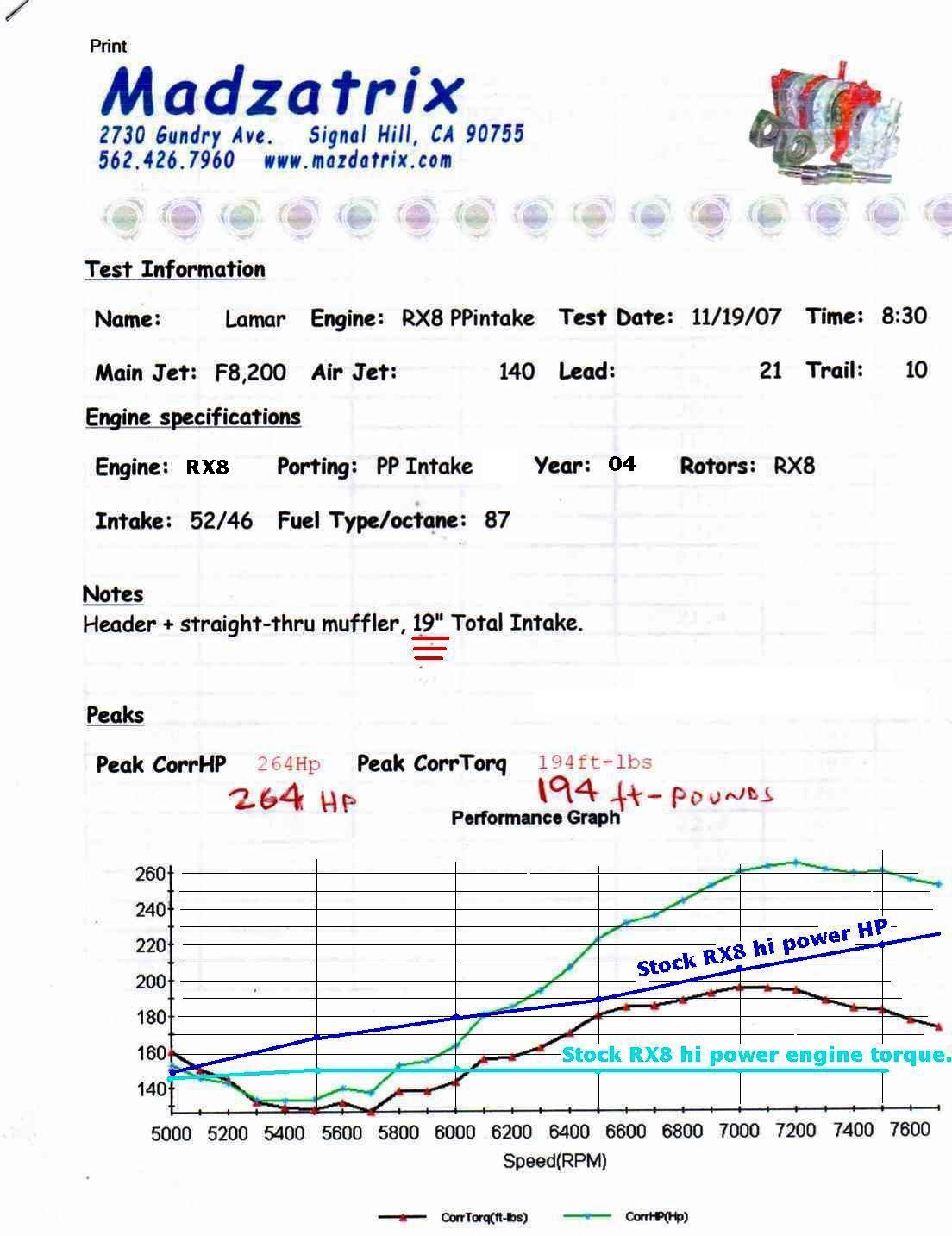 RX8PP264a-Stock-RX8 data.jpg
153.55 KB
Reply author: urquiola
Replied on: Jun 16 2013 2:08:54 PM
Message:
An old chart in a 1974 book by E McGovern 'The rotary engine handbook', shows that apex seals' wear is nearly 5 times less if the fuel used in the Wankel RCE contains Lead, that acts as a solid state lubricating agent. Of course, leaded gasoline is not available today, but there are other solid state lubricating agents, as Molybdene Sulphure (MoS2), that is sold as a lubricating oil additive under brands such as 'Molykote A' or 'Liqui-Moly'. I have no info about the use of Molybdene additives for 2-Stroke engines oil, and I'm waiting for the response of the German producer of 'Liqui-Moly', to know if it can be used in Wankel RCEs, as a possibility exists that this solid state lubricating agent fouls the plug, or induces problems in the seals.
Another issue: Kawasaki patented in the USA in 1974, patent Number 3848574, accessible for free download in ESPACENET, that putting a small recess in the shape of a wedge from the plug hole in the trochoid surface, towards the trailing edge of the combustion chamber, would redirectionate the flame front towards the rear part of chamber, where combustion is usually more difficult, and where unburned gas that contributes to decrease power output, increase fuel use and emissions is located. The same concept appears in a SAE paper: 921444E by Marcos Langeani from Chile. The plug hole improvement is very easy, cheap and safe to implement, it may allow using a fuel to air ratio more favourable to fuel economy, power and emissions, and is highly suitable for single plug per rotor engines, and, please, if somebody tests it, let us know the results. Nice week, salut +
Download Attachment: 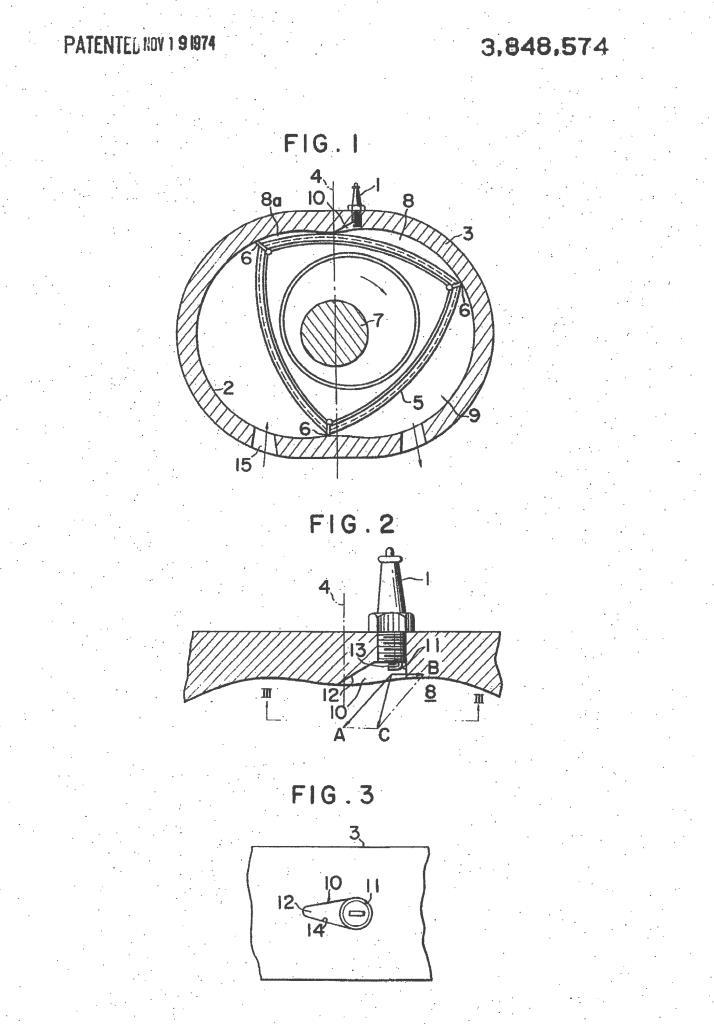 Kawasaki plug hole improvement for Wankel RCE.jpg
70.11 KB
Reply author: urquiola
Replied on: Jun 18 2013 08:37:57 AM
Message:
I've got a response from the Liqui-Moly people in Ulm, Germany:
For 4-Stroke engines, the amount of Liqui-Moly added is 4-5% (It seems that it's referred to the amount of Liqui-Moly in the total of lubricating oil in the engine)
For 2-Stroke engines with separate lubrication, the amount of Liqui-Moly added should be 4-5% of total of lubricating oil.
For 2-Stroke engines with lubrication by oil-fuel mix, the amount of Liqui-Moly added must be 1-2 ml per liter of fuel.
For 2-Stroke engines, the amount should be 2% if the clutch is in bath of oil.
For Wankel engines, it's essential differentiating if the oil is added to the fuel (This is the approach giving the best results in any condition and for any endpoint considered) or if the lubricating oil is separated; in the case of lubrication by oil-fuel mixture, the proportion of Liqui-Moly should be as for the 2-Stroke engines with lubrication by oil-fuel mix, and if the Wankel engine is one that has a separated lubrication, this would be the case of most automobile engines, that have a pump that adds a small amount of oil to the places where it's needed, the amount of Liqui-Moly added should be as in the 4-Strokes with separate lubrication.
Liqui-Moly comes in 300 ml cans (18.3 in3), I've found no information about the amount of MoS2 it contains.
The information that Wankel engines do better if the oil is added to the fuel, as in the old moped and other applications 2-Stroke engines is of importance, it comes from the www.rotaryeng.net website, adding oil directly to the fuel can add a lot to the engine life, the problem of choosing the right oil remains, users pointed that for air cooled engines with an oil-fuel mix lubrication, the oil that gave the best results was Shell Rotella 30, and for the liquid cooled engines, Citroen for example advised using a 20W-50 multigrade Total mineral oil, a multigrade oil is required for cold weather engine starts, and a mineral oil is necessary, as synthetic oils do produce a higher and noticeable amount of gums and ashes after being burnt, and this can foul the plug, and stuck the seals.
Reply author: urquiola
Replied on: Jun 18 2013 09:08:09 AM
Message:
Here are some charts in the SAE paper 790435 by T Kohno et al, from Toyota: 'Analysis of Light-Load Performance in Rotary Engines', It contains info about EGR in a Reed-Valve ctd' Peripheral Intake Port Wamnkel RCE. I'm not sure if copyright allows this, so, it's easy to delete everything if necessary.
Download Attachment: 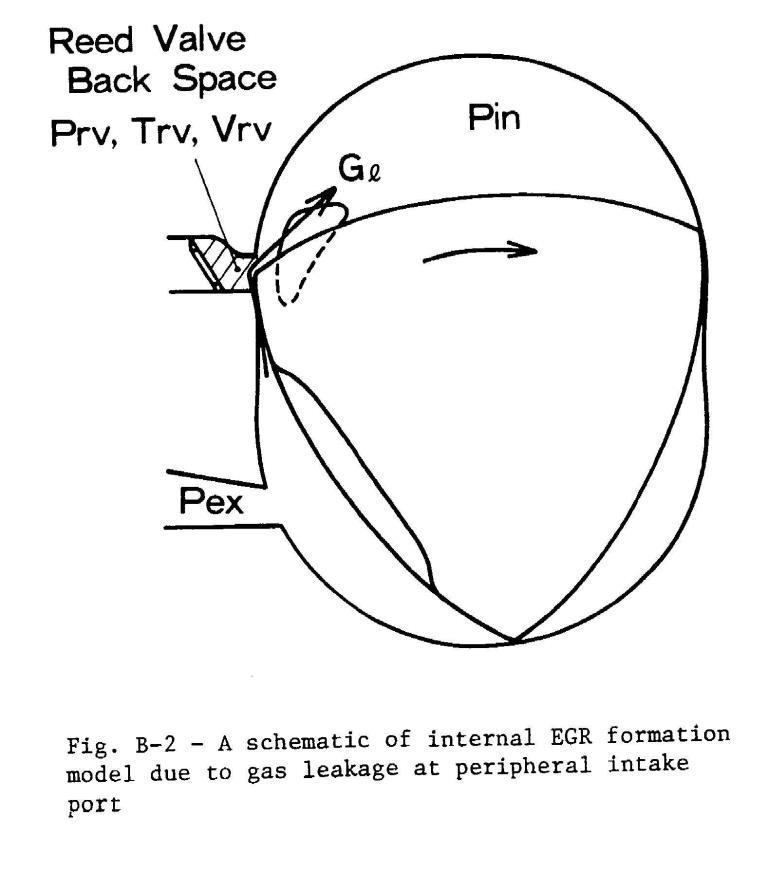 Toyota EGR internal formation data.jpg
55.21 KB
Download Attachment: 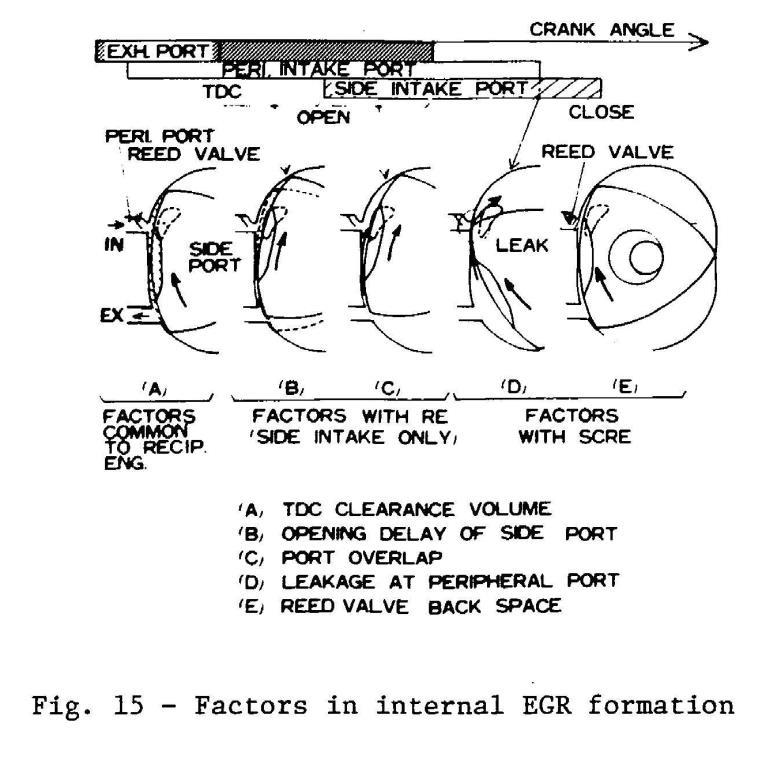 Toyota SCRE EGR data.jpg
82.18 KB
Reply author: urquiola
Replied on: Jun 18 2013 09:11:53 AM
Message:
This is another image from the same SAE 790435 paper
Download Attachment: 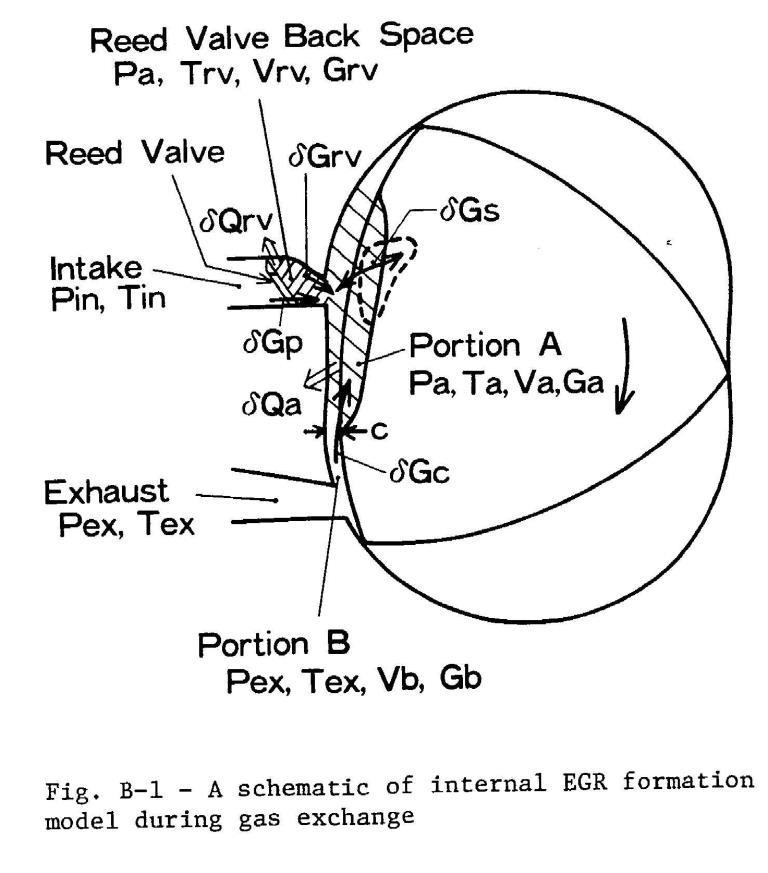 PP with R-V Toyota data.jpg
74.96 KB
Reply author: urquiola
Replied on: Jun 18 2013 09:17:16 AM
Message:
Info from the 1974 book by E McGovern 'The Rotary Engine Handbook' about trochoid wear with leaded and unleaded fuel. As leaded fuel is not available, the solid lubricating agent action of Lead can be alternatively given by additives containing MoS2, as stated above. Salut +
Download Attachment: 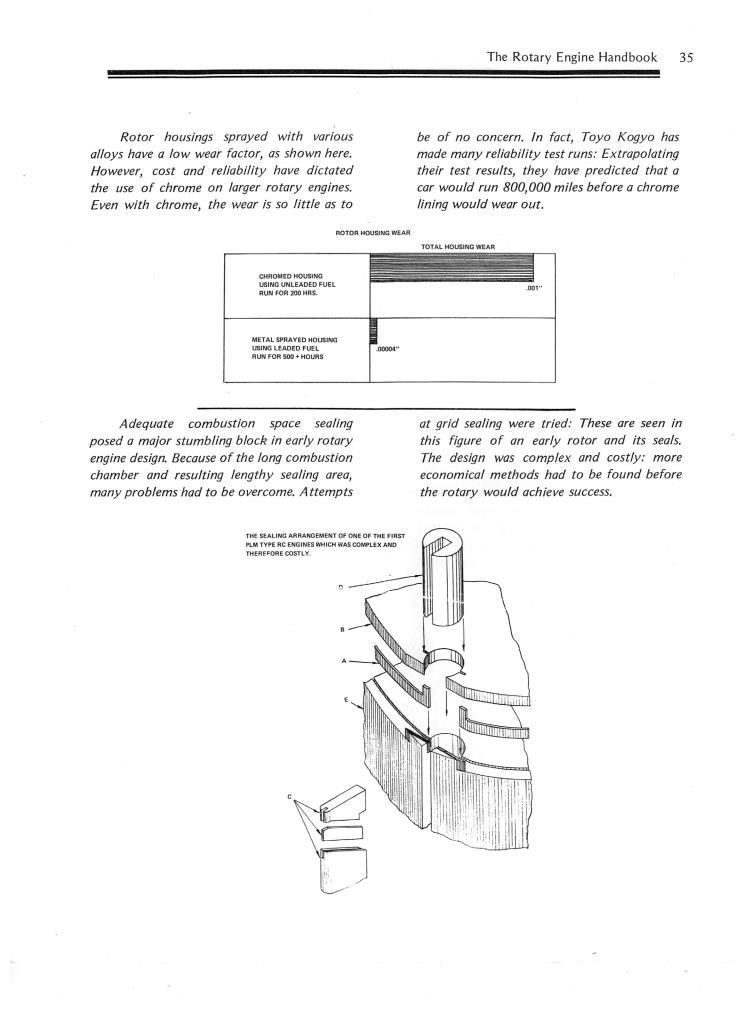 Unleaded vs leaded fuel trochoid wear in RCE.jpg
71.73 KB
Reply author: Aaron Cake
Replied on: Jun 22 2013 10:40:09 AM
Message:
Lead for a long time was used as a lubricant in fuels. Of course it was banned due to the major health effects of every vehicle spitting lead from the tailpipe. Older piston vehicles especially need different valve seats now that we have lead free fuel. Without the lubricating properties of lead, old valves would fail in short order.
So it stands to reason that it would benefit a rotary as well. Perhaps nowadays there are better choices as you suggest. One would need to examine the emissions changes by burning any moly based grease, as well as the decreased longevity of spark plugs caused by fouling.
Mazda for years has worked to reduce apex seal lubricating oil consumption, mainly as a component of meeting more strict emissions standards. With a few hiccups along the way, the stock metering oil system has worked very well for all these years and there are many high mileage rotarys out there continuing to run just fine. Obviously when building much more power than the stock system was designed for we must move to a 2 stroke premix system.
Apex seal wear was solved long ago by Mazda. In 250,00 miles you're typically only wearing about 2MM off the apex seals. So aside from the stupid Mazda decision in the mid '80s to go with idiotic 3 piece seals (which they have since replaced with proper 2 piece seals), the issue of apex seal is basically solved. Now if we really want to move further, we need to build ceramic seals and housings.
Reply author: urquiola
Replied on: Jun 29 2013 4:58:15 PM
Message:
Your comments are right. I just would like to remark that the people around the Corvair flat-six air cooled engines say that if you have the opportunity, it's better that you have the valve seats reinstalled and the whole think reviewed, as the engines that left the production line of GM were not very well finished, and it's better having the valve seats and other things in the engine having a remake by an expert. Mazda is a serious producer of engines and autos, but sometimes, the kind of changes that private owners can apply to their engines wouldn't be practical in a big output production line, this may be the reason why some changes described by private researchers or even other engine makers are no applied to the series.
Reply author: Aaron Cake
Replied on: Jul 06 2013 10:34:06 AM
Message:
Mazda also has to follow very strict emissions guidlines, which is part of the reason the emissions system was always very complicated on the rotary. Unlike the pison engine the rotary emissions systems needed to deal with overlap, high EGTs and in general a far more "2 stroke" like exhaust output. They have always made judicious use of secondary air from the air pump, alternately injected into the exhaust ports, into the intake manifold, into the cat or vented depending on conditions. Or sometimes all 3. For example, during light decel air is directed into the intake manifold to lean the mixture and prevent backfires. During warmup it's pumped into the exhaust ports to combine with the rich mixture which lights off the cat.
Reply author: urquiola
Replied on: Aug 22 2013 08:19:03 AM
Message:
Thermal Efficiency of an Engine can be expressed by: 100(1-Te/Tp) -in %, Te= Exhaust Temperature, Tp=Peak Combustion Temperature; as pointed in the 'Wankel Engine Breakthrough' YouTube Video, Wankel RCEs have high Exhaust Gas Temperatures, that from the early days of Internal Combustion Engines are known being linked to low Effective Compression Ratio, these first times because of poor quality of available gasoline. If changing the plug hole to an slot as Ernie Brink proposes, reduces greatly the Exhaust Gas Temperatures, this would mean a much higher Effective Compression Ratio, improving the overall efficiency of Wankel Engine; this looks as a change worth testing, but some welding and trochoid surface coating expertise is needed. Rounding the plug hole-trochoid surface intersection corner, and also port-trochoid surface intersection would improve engine's life, as it would minimize chances of seals hitting hardly the hole borders. We wait for more experimental data about these modifications, please! Salut †
Boquilla=nozzle, port, tube, duct, hole.
Download Attachment: 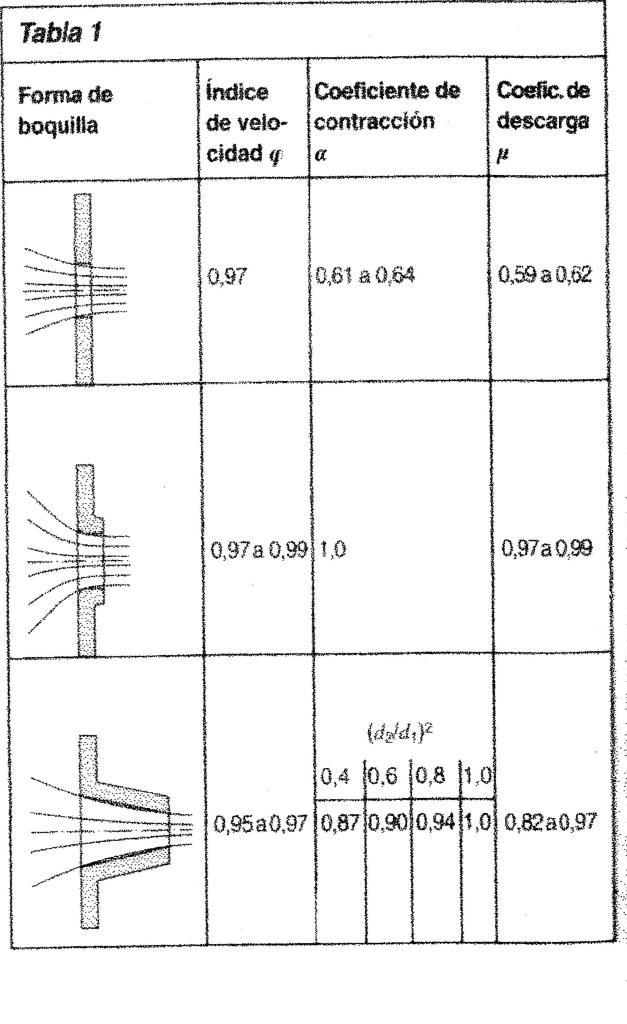 -Entry shapes -form Bosch manual of automobile technics 001.jpg
90.04 KB
Reply author: urquiola
Replied on: Sep 07 2013 05:40:32 AM
Message:
There's some room for improving Volumetric Efficiency of RCEs at low rpm, as pointed in the Curtiss-Wright's figures from SAE paper S236, by R T Hurley, also published in SAE Journal, June 1960, and the K Yamamoto 1981 book'Rotary Engine'. Let's see what happens if proposed changes are implemented. Salut †
Download Attachment: 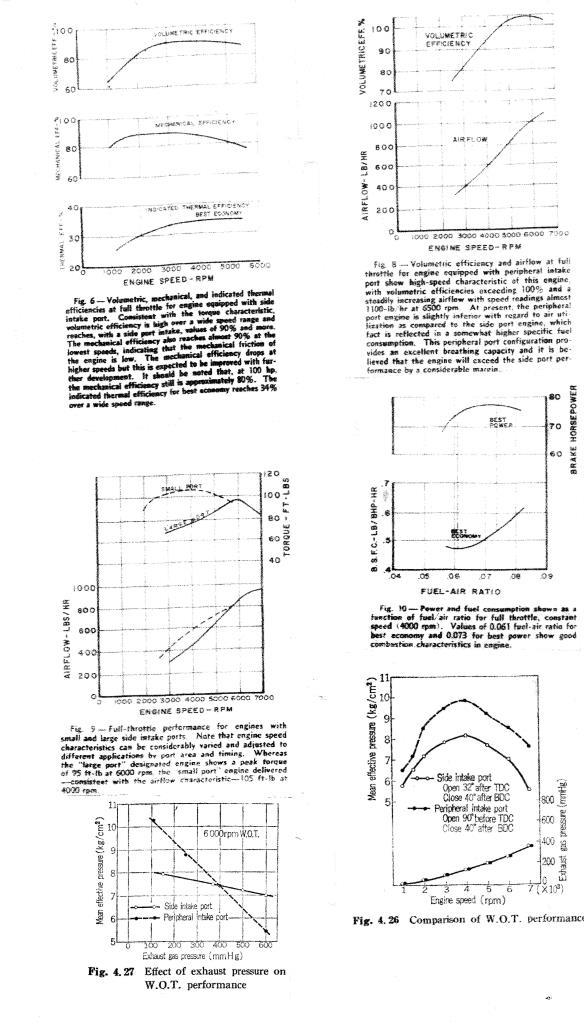 RCE breathing.jpg
98.98 KB
Reply author: urquiola
Replied on: Oct 13 2013 11:11:47 AM
Message:
A question: is there somebody willing to provide us with data about the flow of air (liters/min) and pressure (psi, or another unit: lb.ft, kg/m2, kg/cm2, gr/cm2, and so on...) at which the air pump injects air in the thermal reactor or in the emission reduction systems in the RX-7 and other RCE Mazda cars' exhaust, and also the same in connection to the displacement and power of the Wankel Rotary engine?
Thanks. Best regards. Salut †
Reply author: Aaron Cake
Replied on: Oct 14 2013 10:37:30 AM
Message:
A 13B with stock ports at 8000 RPM moves about 300 CFM when the inlet is at atmospheric pressure. Air pump, no idea but it is much, much less.
Reply author: urquiola
Replied on: Nov 15 2013 09:22:04 AM
Message:
Ford not even tested, along with Toyota, the Reed-Valve control for Intake Ports in their Wankel RCEs, but has two patents about it, Espacenet publication numbers are:
CA1032477 and CA1045553
An article in SAE Journal, (Automotive Engineering) Vol 86, nº 2, Feb 1978; pp 31-42, describes in detail the advances in REs worldwide, and another one in Automotive Engineering, Vol 87, nº 8, August 1979; pp 33-38, summarizes the Toyota results (of SAE paper 790435) on ways to improve light load combustion of REs, basically air injection in exhaust port, and a glow-plug in the leading site plug hole.
Full SAE journal back issues available for download at sae.org at U$15 each. Enjoy it!
Reply author: urquiola
Replied on: Nov 20 2013 7:27:01 PM
Message:
SAE paper 720357 'Combustion Characteristics of Rotary Engines', by K Yamamoto et al., describes the important issues of combustion chamber recess shape, among it the S/V ratio and the quenching it induces, plug placement, and the steps taken for improving it, almost the same info is in SAE 'Automotive Engineering', July 1972, Vol 80, nº 7, pp 26-29, at a reduced cost. The Toyota research about air injection on exhaust and use of glow-plug of SAE paper 790345 'Analysis of light-load performance in Rotary Engines', by T Kohno et al.,is in Automotive Engineering, August 1979, Vol 87, nº 8; pp 33-38. Hope you enjoy it!
Reply author: RussellAhmed
Replied on: Nov 24 2013 10:38:03 AM
Message:
[url=http://www.best-golf-gps.info/]Best golf GPS[/url]
Reply author: RussellAhmed
Replied on: Nov 24 2013 10:51:34 AM
Message:
Toyota is a tested and super brand you know........In Automotive Engineering section serve us greatly for its saving cost....In simply i may said "awesome"
Reply author: urquiola
Replied on: May 15 2014 10:28:28 AM
Message:
Canadian Patent 1045553, by Ford, accessible for free download in Espacenet, is about a Reed-Valve controlled peripheral intake Wankel RCE, patents US 3848574 and 3991722, both by Kawasaki, are about a way to improve combustion, reducing emissions and improving fuel economy by opening a cone-shaped hole from the leading edge plug hole towards the trailing part of combustion chamber, and about a charge cooled RCE; the Yanmar Diesel SAE paper 720465 contains info about the results with a Reed-Valve in their 300 cc per chamber, air cooled housing Wankel RCEs. I guess the concept could be tested by making a Rectangular shaped Peripheral Port (SAE paper 780418, from NSU) in a 13B housing, controlling it for example with the system of Plenum ducts and Pyramid Reed-Valves from a Quad 2-Stroke engine.
These rather small PPorts could be used in addition to the existing Side Intake ports for having both the good idle and part load functioning of Side Ports, plus the much better power and MEP of Peripheral Ports. Would you like testing al least the Kawasaki plug hole change, and give us some info about your results? If you have some spare housings and need dissasembling an engine, testing the concept won't put your engine at risk. Thanks. Salut †
Download Attachment: 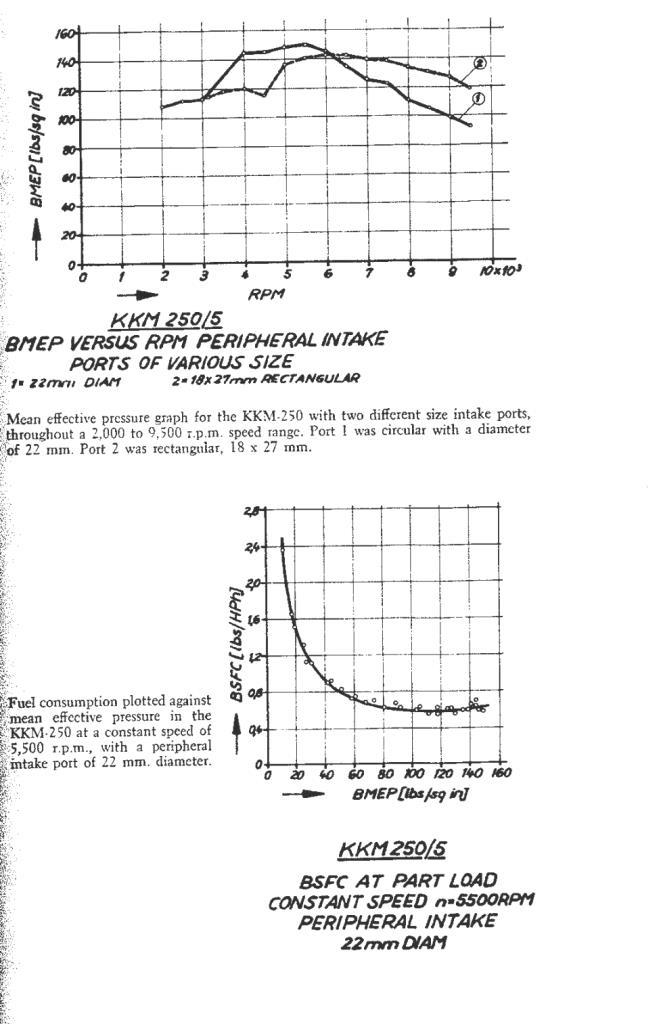 Rectangular vs Round Intake Port NSU.jpg
81.88 KB
Download Attachment: 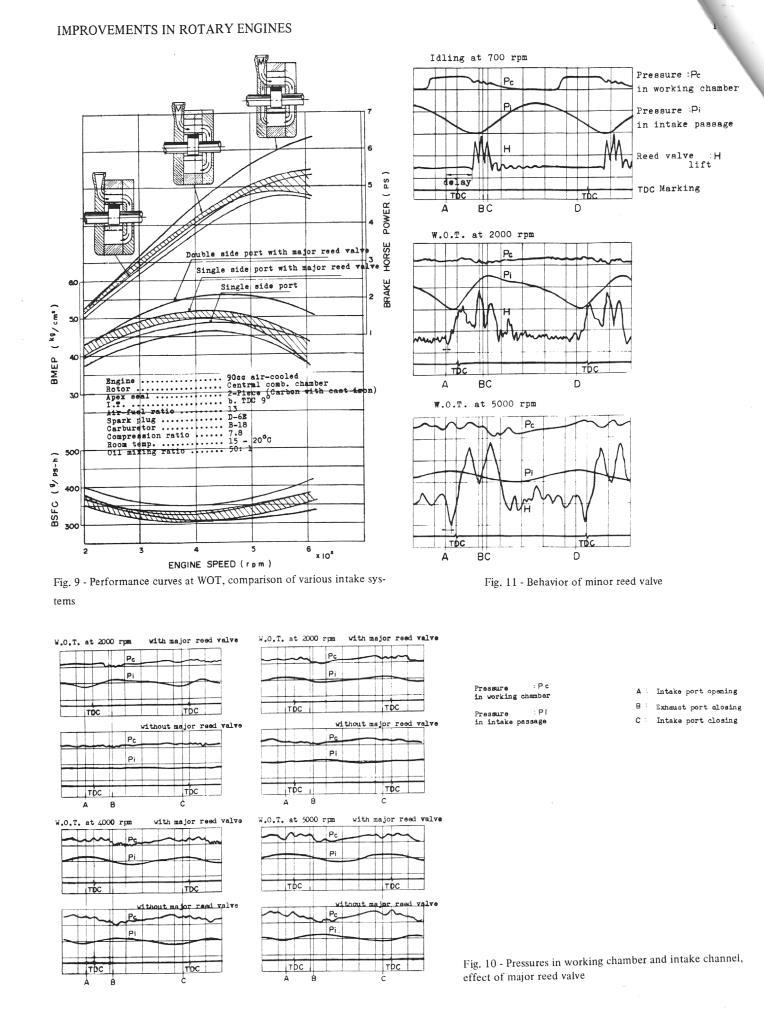 Yanmar Reed-Valve Data.jpg
123.81 KB
Download Attachment: 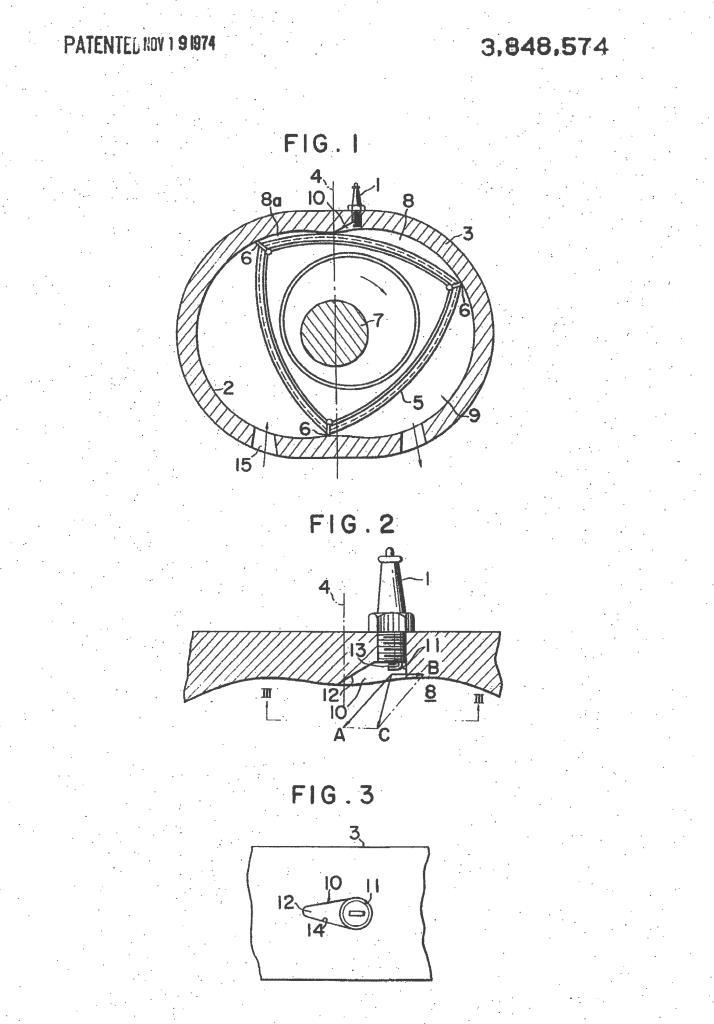 Kawasaki plug hole improvement for Wankel RCE.jpg
70.07 KB
Download Attachment:  Yanmar Diesel Intake Flow Path Variants .jpg
90.44 KB
Download Attachment: Yanmar Diesel RCE -Single vs Double Side Port .jpg
99.19 KB
Reply author: urquiola
Replied on: Jun 13 2014 07:56:21 AM
Message:
Hello again!: besides documents cited, you may like looking in Espacenet for Ishikawa et al (Nissan), 1974 US patent 3844256; and R Yamauchi, 1970 US patent 3514235. Some charts on PP vs SP and Admission and Exhaust Pipe lenght effect are included in post; for more info: SAE paper 2013-32-9161, Dun-Zen Jeng et al, about: 'Intake and Exhaust Pipe effect on RCE Performance'. For small engines: SAE paper 2014-01-2160, by Wei Wu et al, about a 'Heat Pipe assisted Air-Cooled (UEL) Engine, for better Durability, Power and Efficiency'.
According to John Robinson, about 2-Stroke engine tuning, (Newnes Technical Book) square ports do give the best results, but are also the least kind to seals, perhaps this could be overcome by rounding/streamlining the duct-chamber intersection, from the usual rect angle, to something softer, from which the seal won't get a hammer style contact when crossing the port and meeting the port end.
Many times this type of minor changes are not implemented by the engine makers, because cost of having this in the production line would be too high, perhaps the industry standard for a novelty to be incorporated into series would be that a technology change should offer a 10% performance improvement along with a 10% cost reduction; the policies where workers got prices for discovering things as the way to use two screws for a task instead of three, saving some hundreds of thousands screws every year, seems no longer being in force.
Download Attachment: 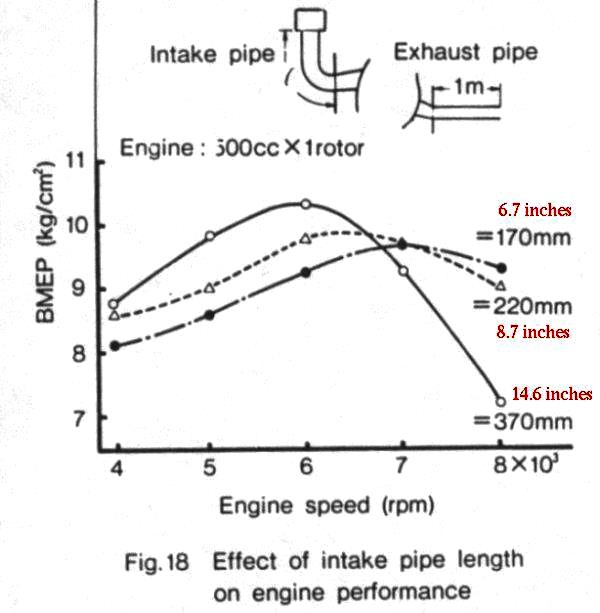 Intake-pipe-lenght-v-BMEP.jpg
38.25 KB
Download Attachment: 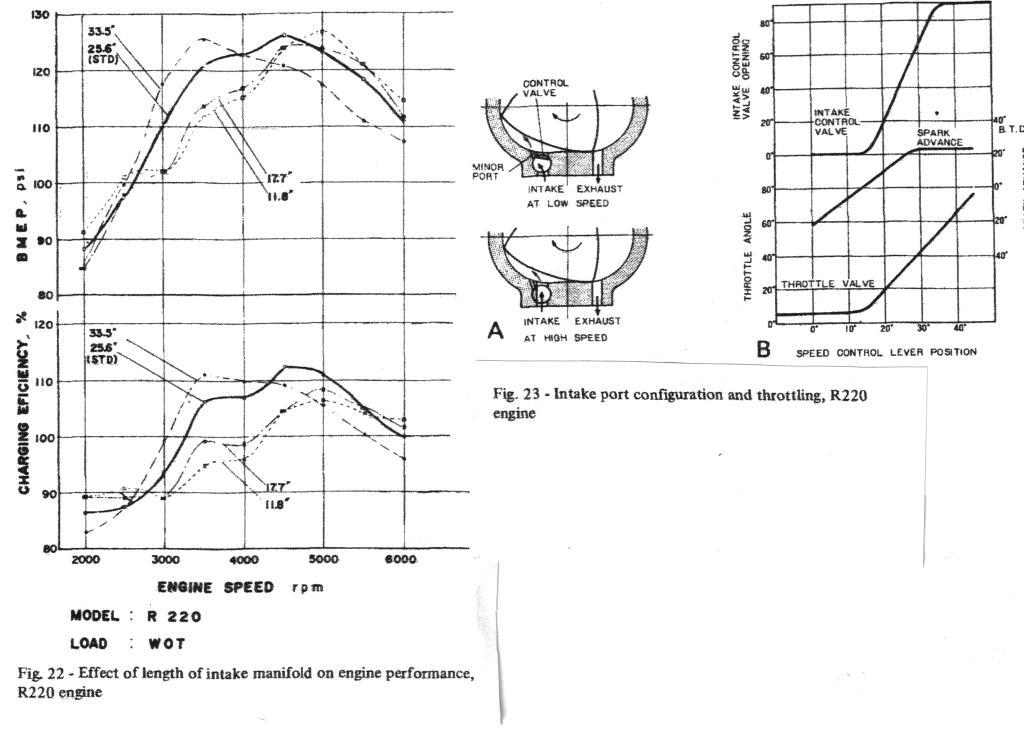 K Yamaoka -H Tado -Intake pipe lenght effect.jpg
95.58 KB
Download Attachment: 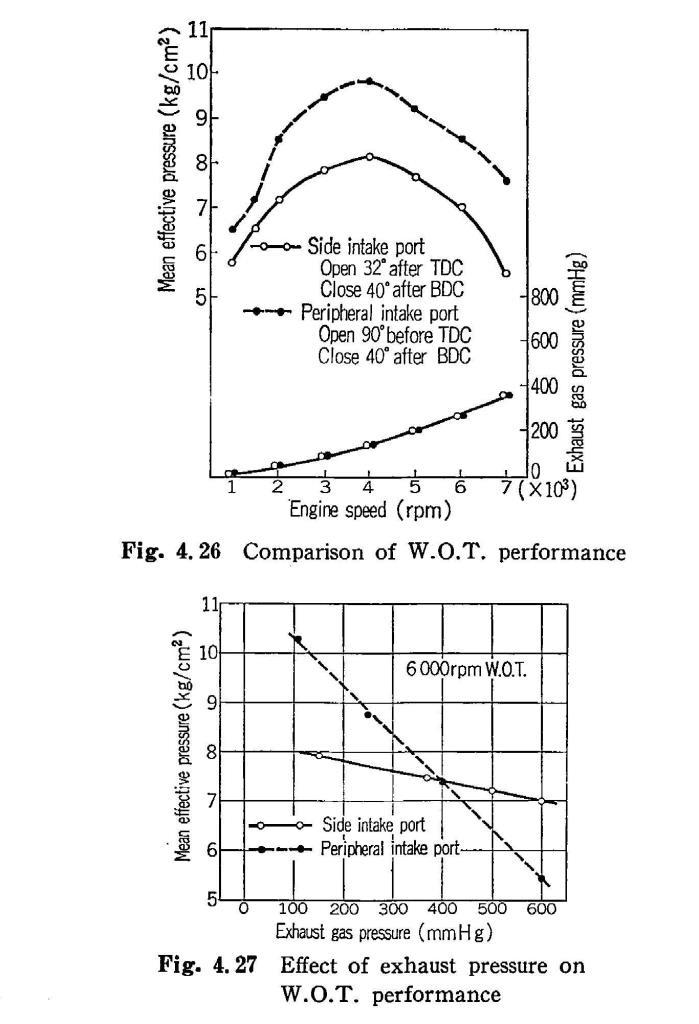 PP vs SP Intake MEP.jpg
81.47 KB
Download Attachment: 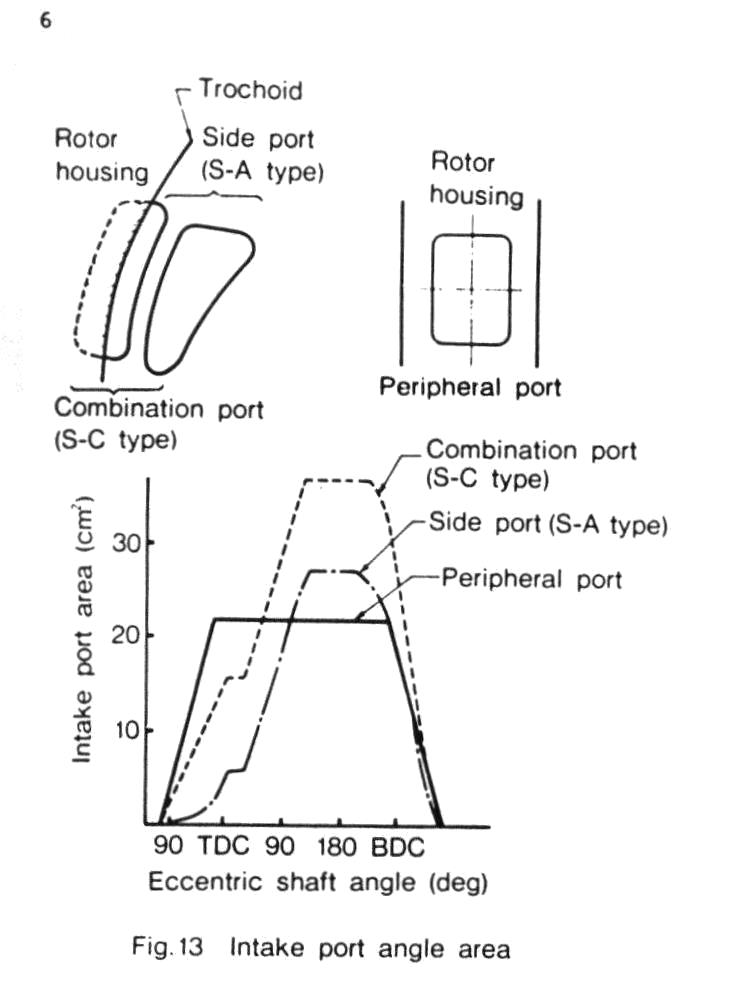 Side-port- vs p-port.jpg
54.98 KB
Download Attachment: 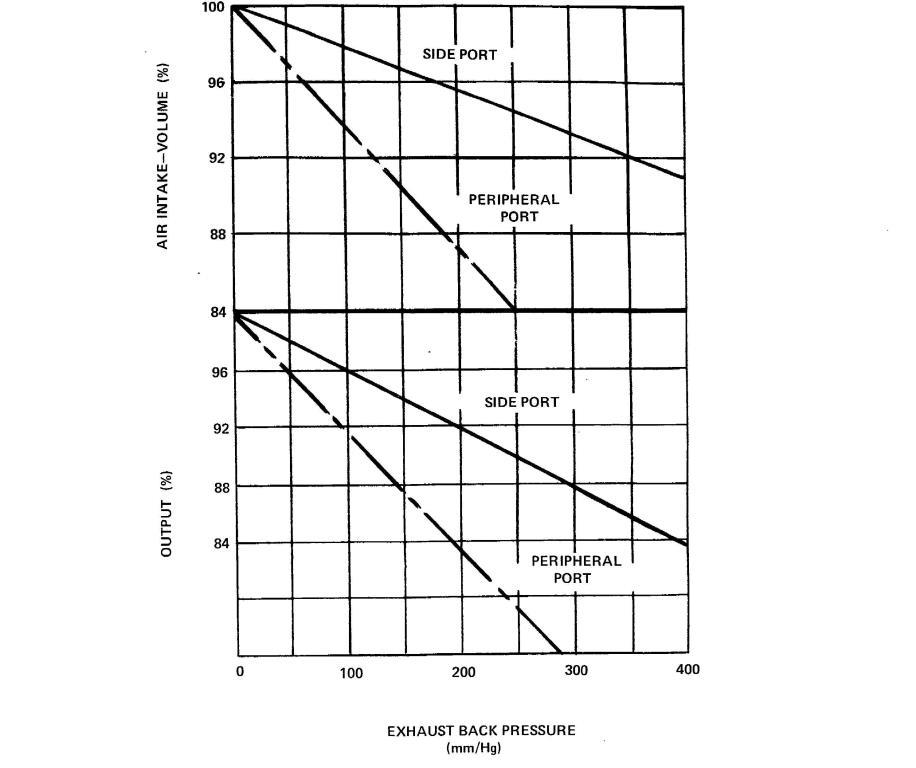 E McGovern -RCE Peripheral Exhaust Port vs Side EP vs Exhaust BackPressure.jpg
61.82 KB
Download Attachment: 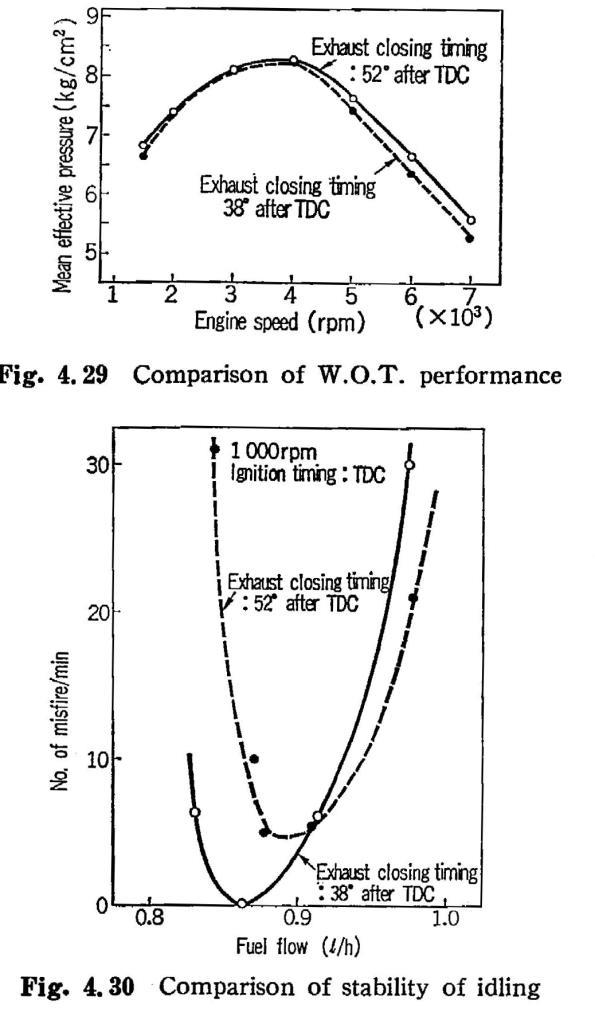 Exhaust port timing RCE.jpg
68.7 KB
Download Attachment: 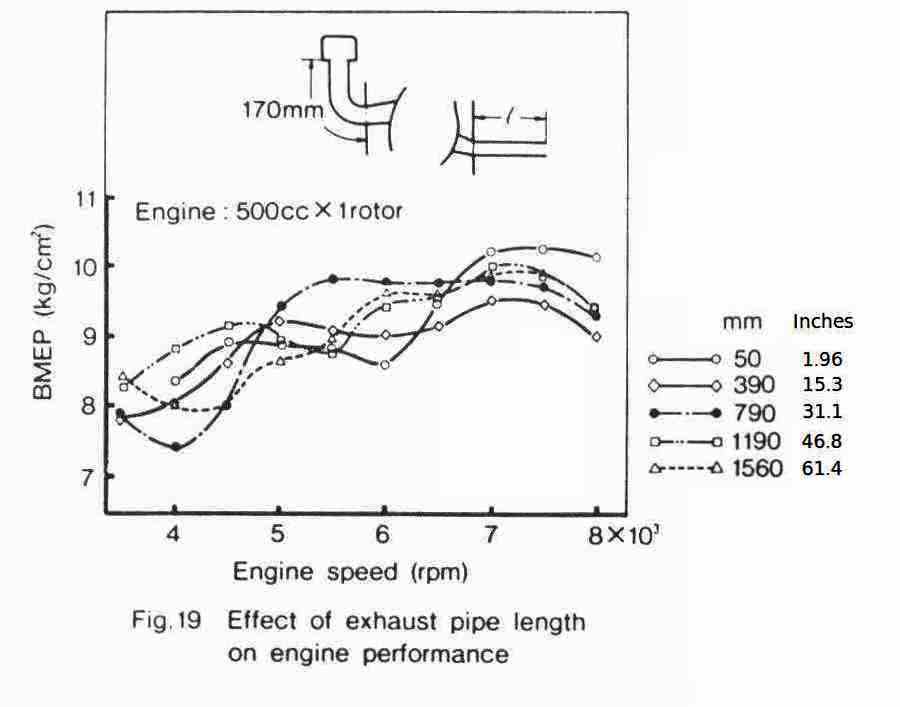 Exhaust-pipe-tuning.jpg
31.77 KB
Download Attachment: 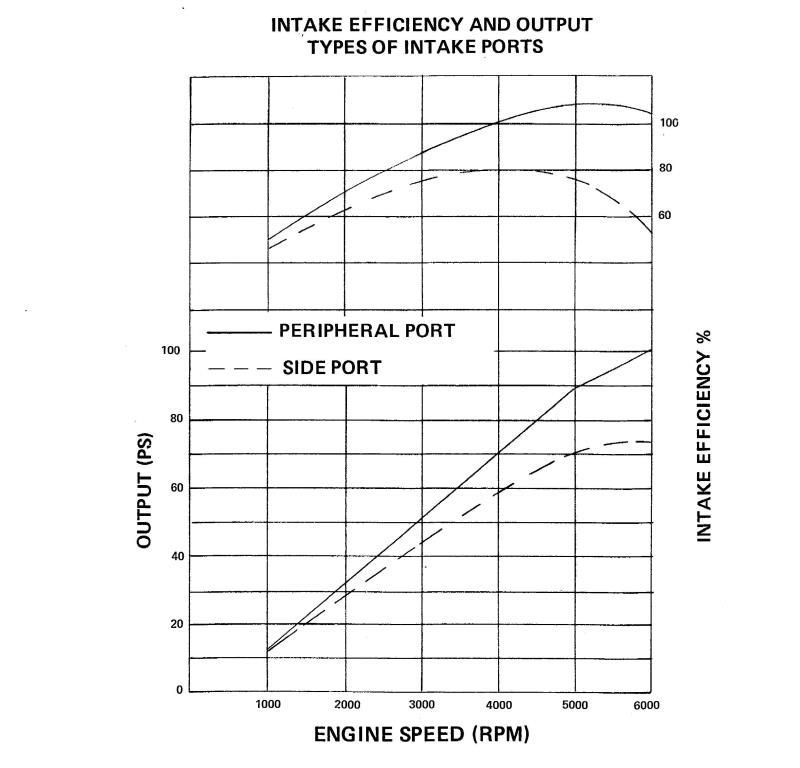 E McGovern -RCE Periph Intake Port vs Side IP.jpg
60.41 KB
Download Attachment: 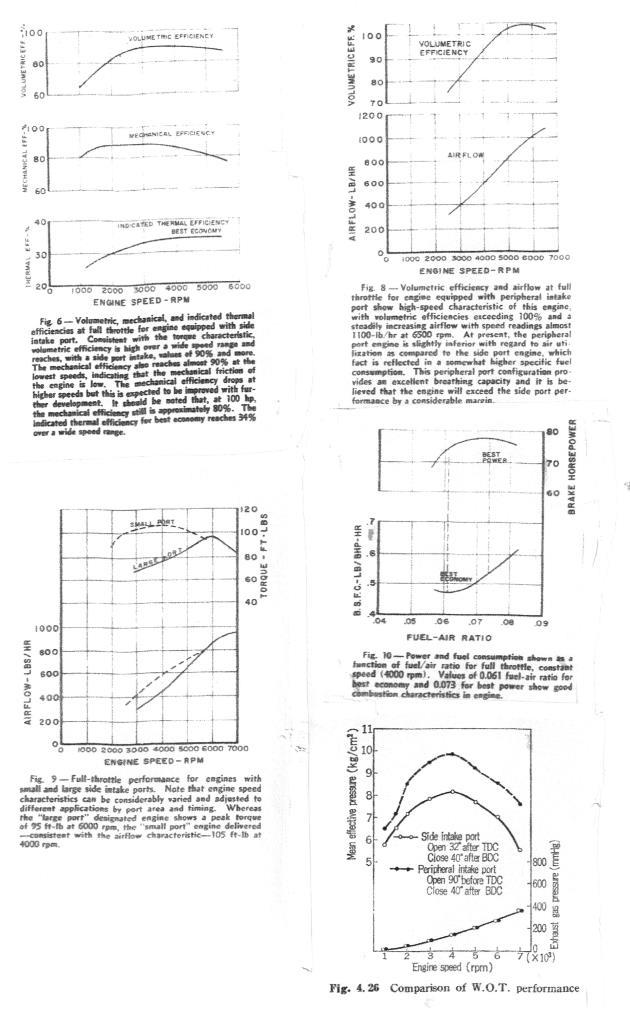 Wankel RCE -Ports -Efficiency -MEP.jpg
88.94 KB
Download Attachment: 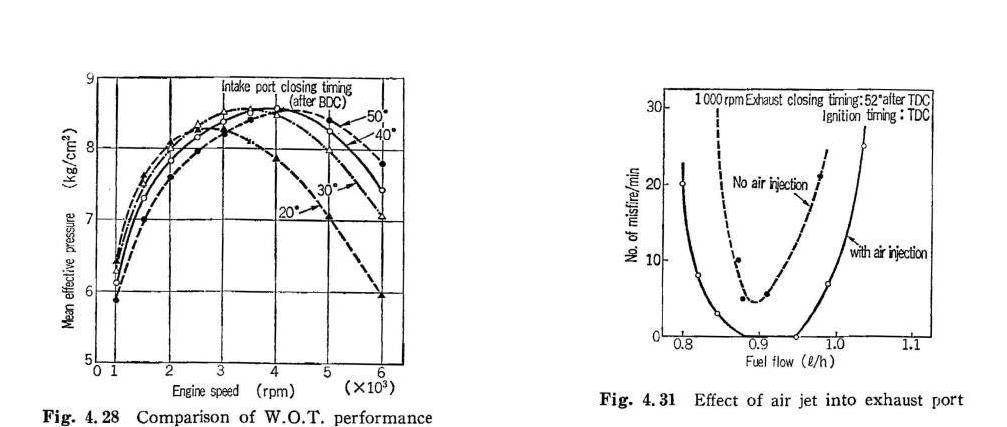 Intake port timing.jpg
50.86 KB
Download Attachment:  Nozzle shapes -Bosch manual auto tech.jpg
90.02 KB
Download Attachment: 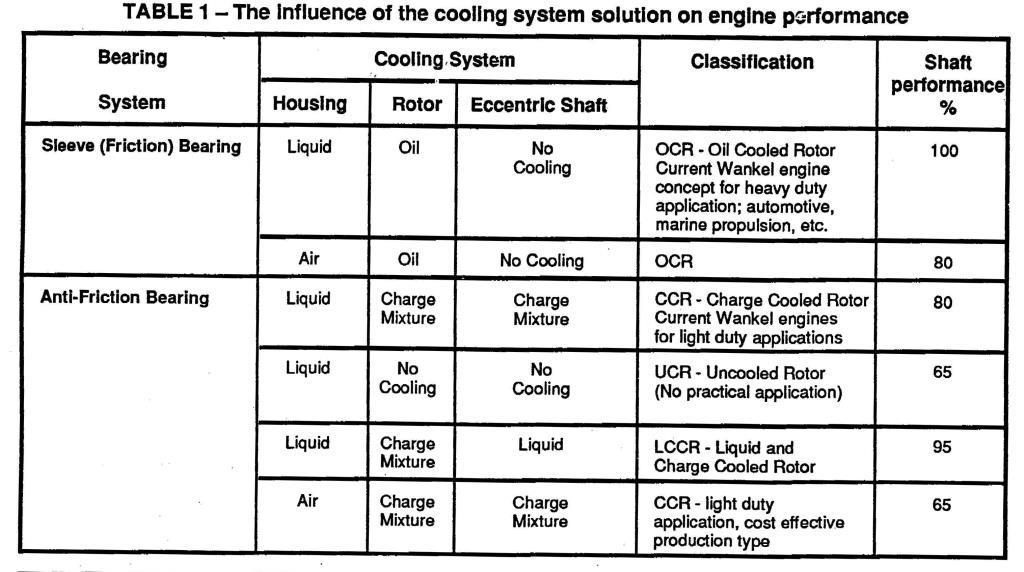 Wankel RCE cooling systems & performances.jpg
99.93 KB
Download Attachment:  Wankel RCE cooling ways and mnfg' costs.jpg
71.93 KB
Download Attachment:  Willys Overland Roadster 1916.jpg
106.37 KB
Reply author: urquiola
Replied on: Oct 01 2014 1:03:58 PM
Message:
Surface coatings must retain the oil film necessary for lubrication and friction reduction, must be cheap to apply, and compatible with seals' materials for low wear and a good engine life. The Nikasil was a great improvement in RCEs and other ICEs, also Suzuki in their RE-5 used a combination of Ferrotic apex seals and the housing working surface coating described in Canadian patents by Alfred P. Grazen.
Image is from the 1997 SAE book by Takashi Suzuki, Ph.D. 'The romance of engines'
Download Attachment: 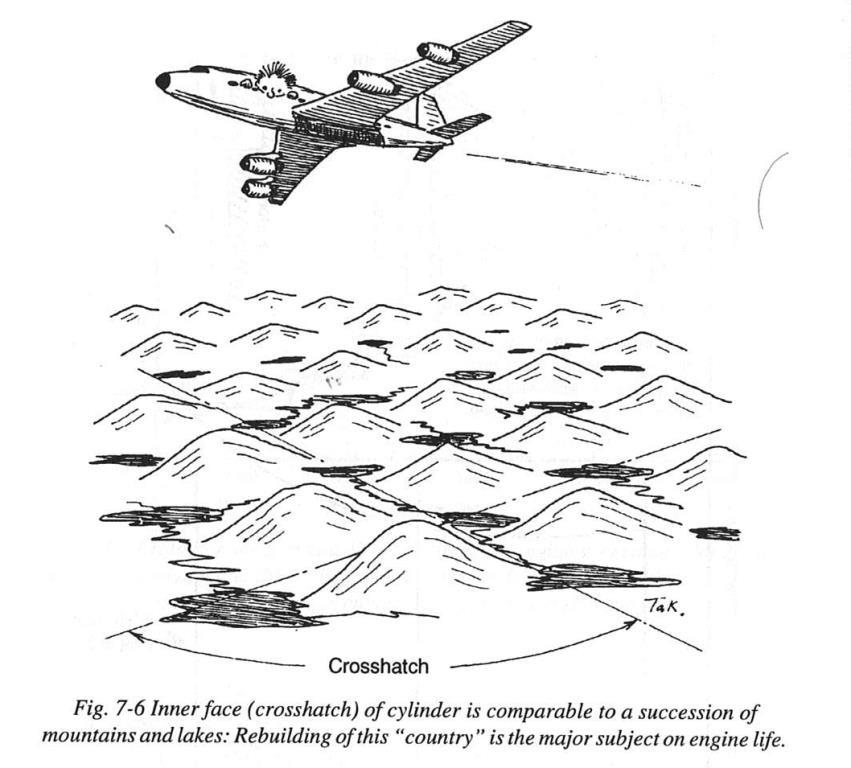 T Suzuki on cylinder surface.jpg
79.59 KB
Reply author: urquiola
Replied on: Jan 24 2015 08:41:41 AM
Message:
Even when the research is almost 40 years old, and that the risk of a solid material petal from a Reed-Valve detaching and entering the working chamber always exists, perhaps a grid just before the port may prevent this, you may have a look at the documents below, pointing to good results with R-V, not only in the small line of charge-cooled rotor, air cooled housing engines of Yanmar Diesel, but in car size RCEs. You know that HydroCarbons in exhaust are in inverse relation to Rotor surface temperatures, the hotter the Rotor working surface, the less the HC in exhaust, also a hotter Housing surface, from 80º C to 130º C reduces HC by 20%; a mineral oil charbonizes at 220º C (Reference: Rotativementvotre) but a synthetic oil resists 50º C above this, in kart engines such as Aixro, an intake transfert port abobe 130º C means risk of severe damages, and an indication to release throttle or stop, this higher working temperatures could be approached by improved materials, also the article in SAE Journal, Feb 1978, points a much cleaner exhaust gas, and improved fuel economy with Iron housings instead of Aluminun. It also remarks that at 3'000 rpm, RCE friction HP losses are 55% of that required in a reciprocating engine; Toyota tested their RCE in Crown sedans, and had 9-11% better fuel economy than with their reciprocating engines. Thanks for your patient attention.
Download Attachment: 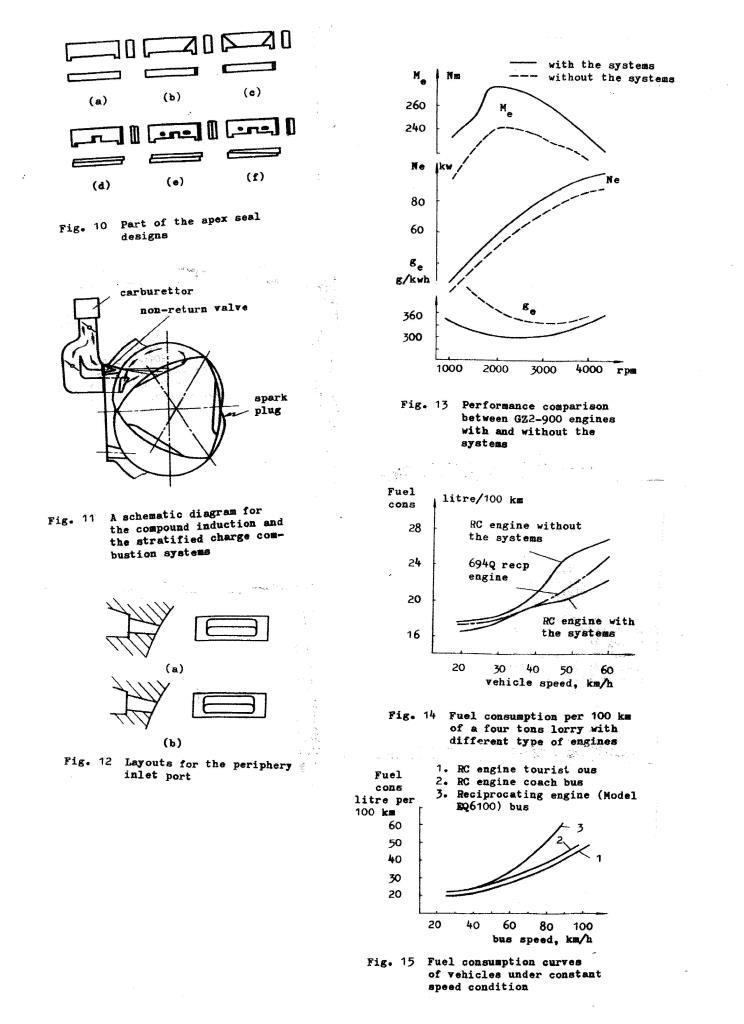 RCE research in China -Teluan Chen SAE 1988-02-01.jpg
84.94 KB
Download Attachment: 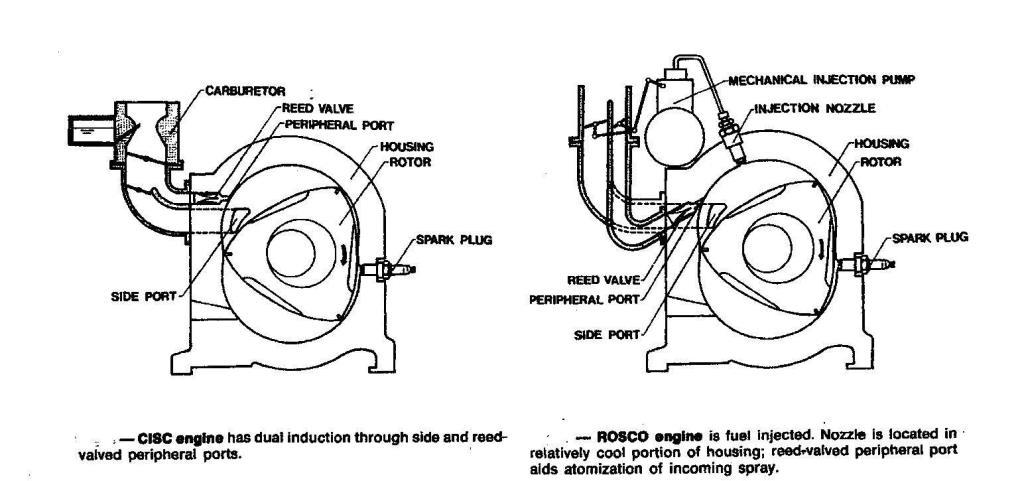 Reed-Valve RCEs 1978.jpg
70.63 KB
Reply author: urquiola
Replied on: Jan 29 2015 1:38:53 PM
Message:
Hi!: some old papers show improved results with new materials, e.g., Ferrotic apex seals vs IKA3 apex seals, and different results with different fuels and lubricating oils. Gasohol 10%, Freedom-motors, P Moeller, and Syvaro, A Adam data, is specially good for Wankel.
Anybody commenting about the availability of seals made with different materials?
('Material', comes from the latin term for: 'Wood', 'madera', in Spanish)
Download Attachment: 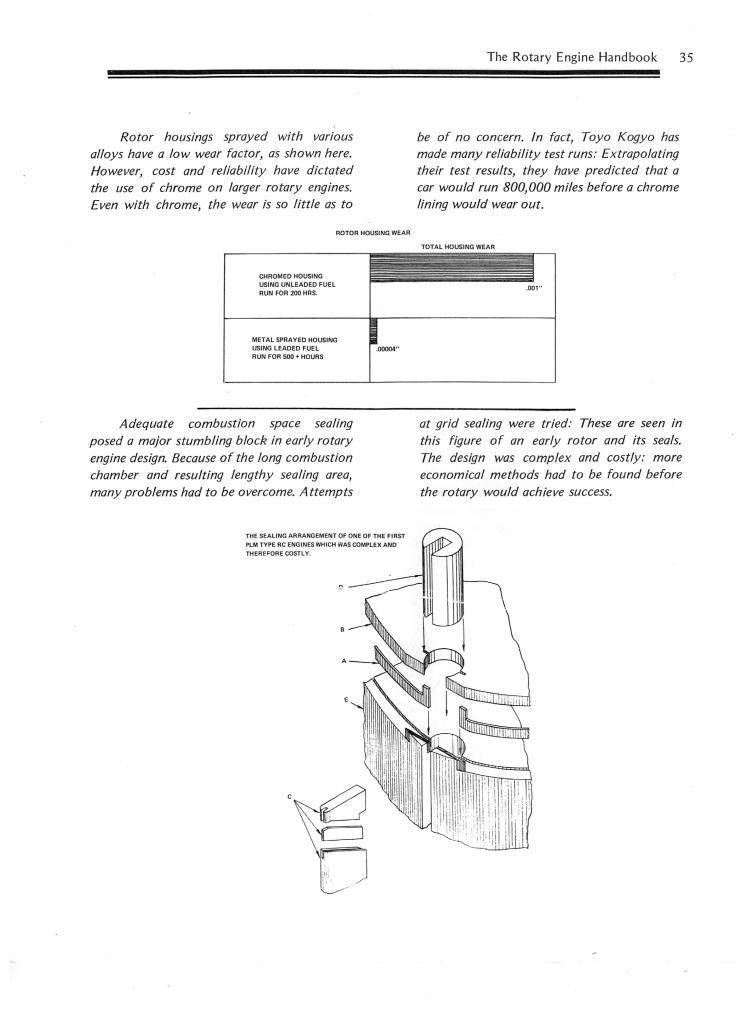 Unleaded vs leaded fuel trochoid wear in RCE.jpg
71.73 KB
Download Attachment: 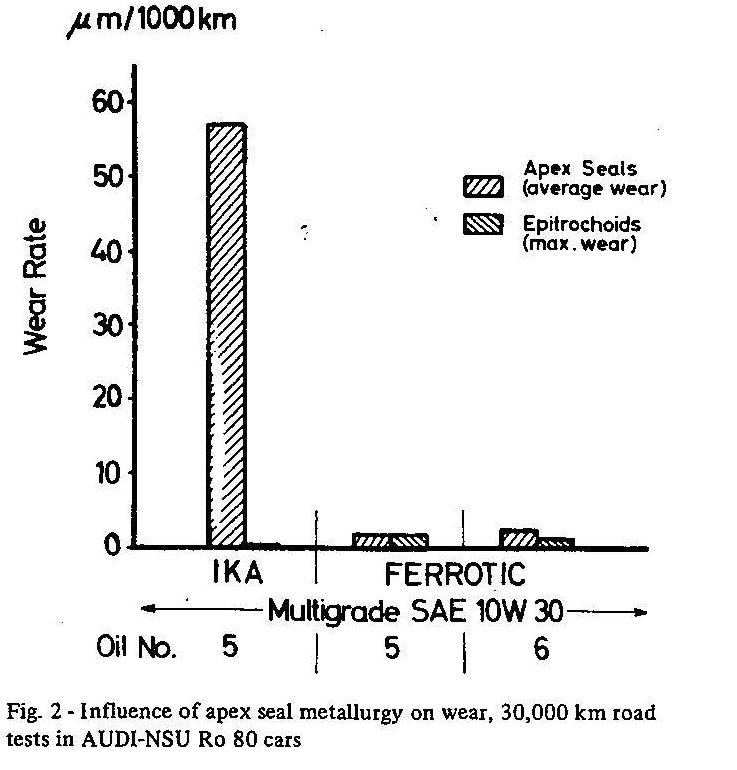 Seal wear -Ferrotic vs IKA SAE 730048.jpg
66.58 KB
Reply author: urquiola
Replied on: Jul 14 2015 1:25:58 PM
Message:
I've purchased a good book on tuning rotaries: 'Street Rotary', HP1549. In the publications about the (old) motorcycle and snowmobile RCEs, a concern is detected about a too high thermal load being specially dangerous for air cooled housings and charge cooled rotors, a hollow: oil, liquid or air cooled shaft was proposed, comments welcome.
I'd like having a confirmation that a bit more of oil is to be added to the gasoline, if you put 'Unleaded gas', Lead in gasoline acting as a solid lubricant, as MoS2, its lack accelerating wear if not compensated otherwise. Thanks, + salut
Download Attachment: 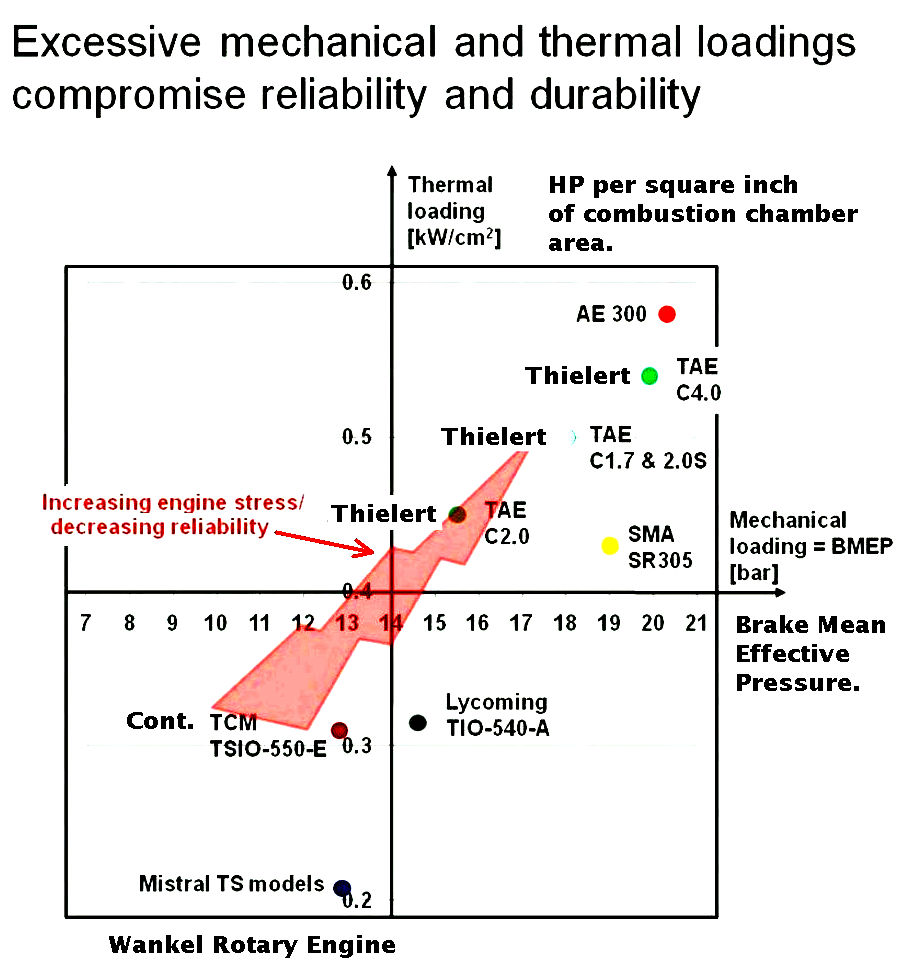 Mechanical-and-thermal-loads.jpg
125.05 KB
Reply author: urquiola
Replied on: Dec 24 2015 07:47:27 AM
Message:
Added coating question: a work by Husqvarna: 'Advanced low friction engine coating applied to a 70 cc high performance chainsaw', SAE paper 2014-32-0115, points improvements in performace and fuel economy in a two-stroke chainsaw engine by adding a coating on piston, the article deals in extense with the compatible lubricants and materials; perhaps this coating could be done also in RCE Rotors.
I'm aware of a french engineer: J Lomat (Lomatsystems), who offers in Sabadell, Barcelona, Spain, piston coating services for small motorcycle engines, and many modern high performance engines, Mercedes, and others, do install coated pistons in the same aim. Anybody testing this in a Wankel? If I do, I'll let you know.
Reply author: Aaron Cake
Replied on: Dec 25 2015 09:21:51 AM
Message:
Mazda has experimented with various coatings but always seems to go back to the basics: nitride irons and hard chrome housings. Of course they have been continually improving the pourousness of the chrome and adjusting the hardness to balance wear vs. lubrication.
Several companies have sprung up and offered coating of internal components (ie. Cermet) however they seem short lived. I think that may be telling.
I do wonder even in piston engines how long any sort of coating lasts. Is it all gone after 100,000 miles? Are there wear lines?
I recall for a time that Mazda added a sort of soft material to the tips (around the corner seal) of the side of the rotors. To provide some sort of relief if the tip should contact the iron. It was only for a few yeas, I think 86 - 90.
Reply author: urquiola
Replied on: Jan 14 2016 11:47:39 AM
Message:
As discussed, SAE paper 2014-01-2160, by Wei Wu et al, University of Central Florida, described impressive, pivotal results, by adding Heat Pipes to cool down an UEL UAV air-cooled Wankel engine, top engine temperature was reduced from 231º C to 129º C, and maximum temperature differences between parts of engine, from 159º C to 18º C, this may totally eliminate problems by thermal dilatation differences, make construction simpler and cheaper, improve performance, and prolong engine life.
The issue may be that, as GM proved, a higher Rotor surface temperature reduces HC emissions, they obtained a good fuel economy in an Iron housing engine, working at noticeable hotter temperature in the epitrochoid working surface.
I wonder if Heat Pipes could be installed in Mazda sized engines. ACT (www.1-act.com) is offering Heat Pipes for cooling electronics and other machines, perhaps one of three mm thick would be enough, at least for an small RCE, there´s also the possibility of cooling rotating parts with heat pipes.
Download Attachment:  Satellite w Heat pipe.jpg
47.89 KB
Download Attachment: 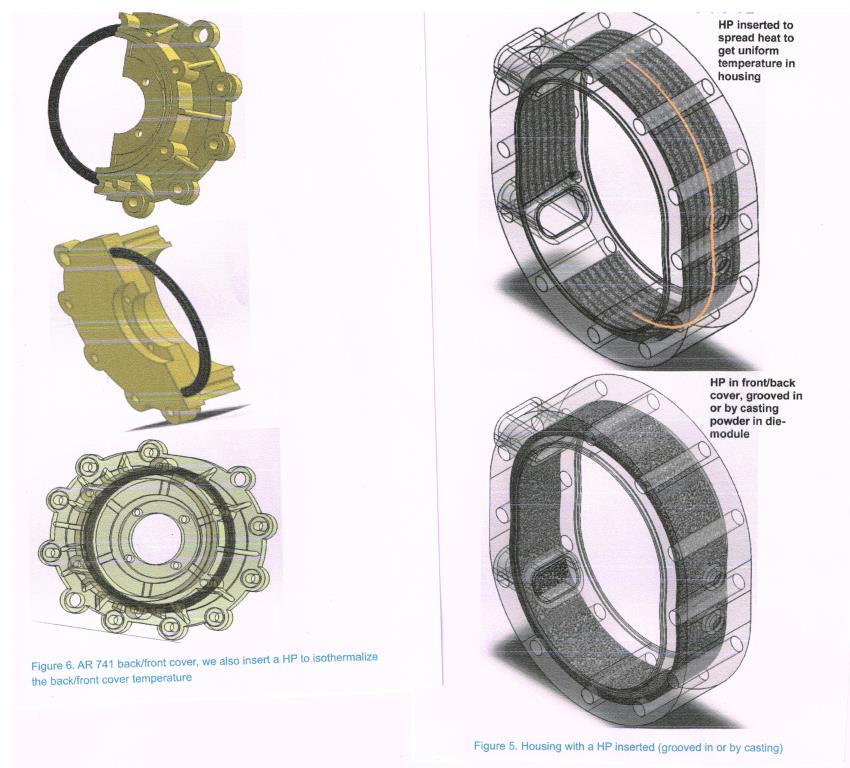 Heat Pipe Assisted Air-Cooled RCE -SAE paper 2014-01-2160 -Wei Wu et al.jpg
90.02 KB
Download Attachment:  Heat Pipes Dunn & Reay -1982.jpg
170.3 KB
Reply author: urquiola
Replied on: Feb 04 2017 4:23:55 PM
Message:
A document in the Ansdale RCE book describes the Surface-Volume ratio of Wankel working chamber, that was blamed for the poor performance, the issue may be just that the flame front moves in the same direction of rotor turn, and also that the quenching, extinction of flame in the cold corners of combustion chamber increases the amount of non burned mix. GM used iron housing, perhaps this was the reason for their good fuel economy results, Iron housings are hotter than Aluminum alloy, but above 130º C to 140º C, the lubricating oil film may carbonize, resulting in a damaged engine. To reduce chances of this, a Solid Lubricant as Molybdenum, MoS2, was added to the oil in the 24 heures de Le Mans Mazda winner car. NASA contract report CR 195445, by Paul Moeller, is about a coating that reduces friction, some companies as lomatsystems do it in a custom way.
Download Attachment: 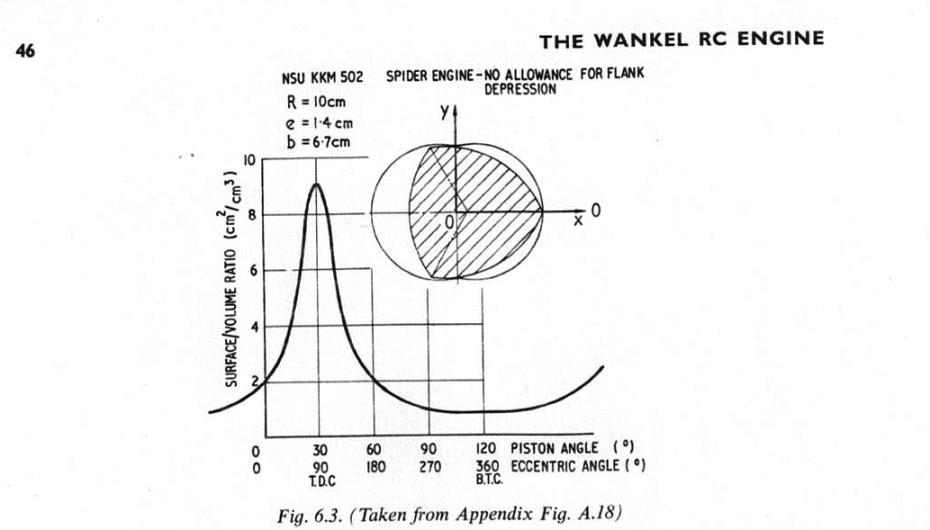 Surf-Vol Ratio RCE Ansdale fig 6-3.jpg
42.22 KB
Download Attachment: 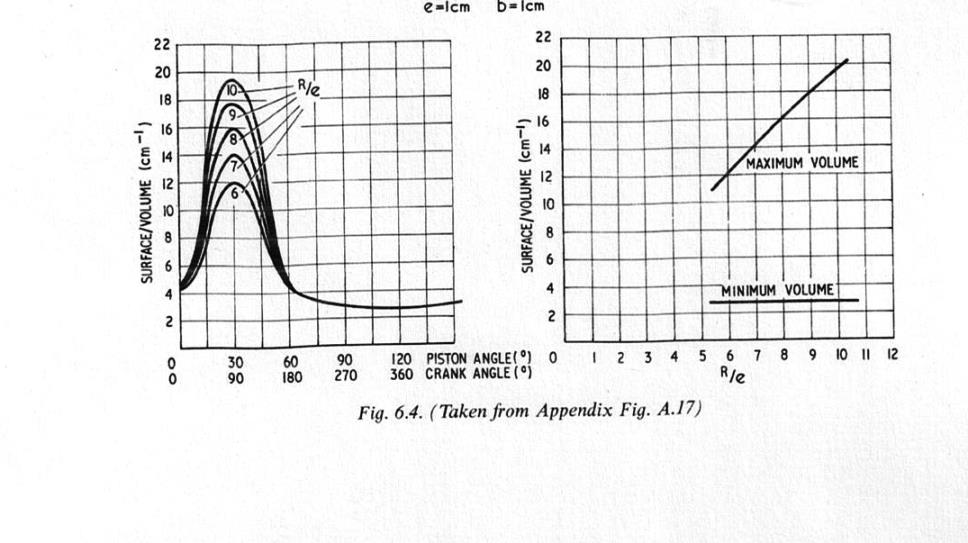 Surf-Vol Ratio RCE Ansdale fig 6-4.jpg
69.71 KB
Download Attachment: Surf-Vol Ratio of RCE -cont lin- vs Recip Eng Rotary Eng -K Yamamoto 1969 .jpg
153.03 KB
Reply author: urquiola
Replied on: Mar 03 2018 4:35:00 PM
Message:
Hallo everybody!: the attached chart, from a technical analysis of NSU Spider Wankel motor, indicating how much the SFC worsens under light load, plus one page in the SAE paper 790435, by T Kohno et al, from Toyota, indicates that the Volumetric Efficiency, MEP, increase from a Reed-Valve cage could be specially interesting under the average use of an automobile engine
Download Attachment: NSU Spider Wankel -Load vs SFC -MR Hayes DP Bottrill -Mira Alvis Ltd .jpg
58.6 KB
Download Attachment: 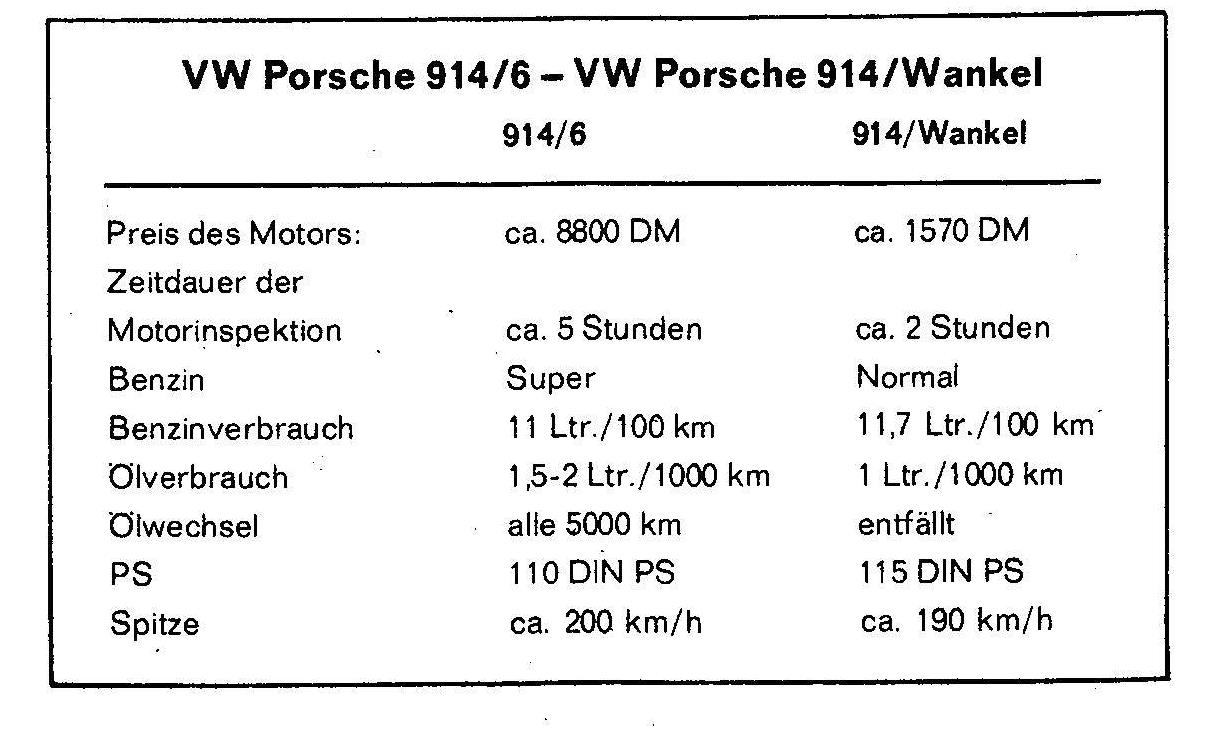 VW Porsche 914 vs Porsche 914 Wankel NSU -1972.jpg
116.06 KB
Download Attachment: 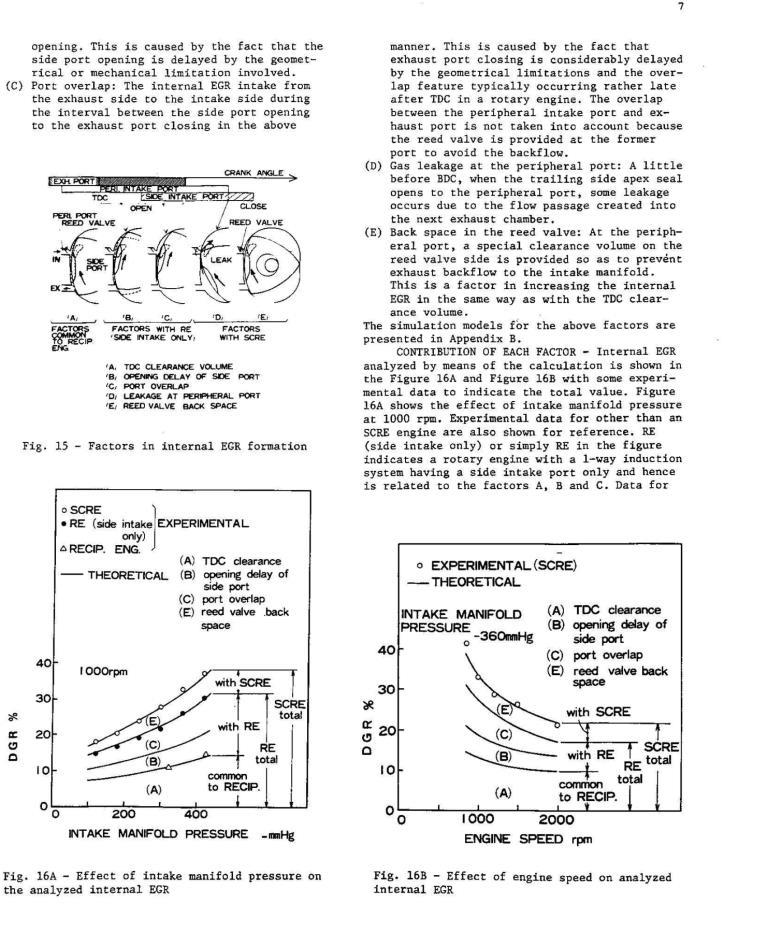 Light load performance of RCEs g -SAE paper 790435 -T Kohno et al -Toyota.jpg
140.29 KB
Reply author: urquiola
Replied on: Mar 03 2018 4:54:15 PM
Message:
I've prepared a list of papers I like, provided it may have interest for someone. It must be purchased directly al SAE or other publishers, there are links in the web for free download of the three versions of the Toyo Kogyo Kenichi Yamamoto books about Wankel engine, 1969, 1971 and 1981. Rotaryeng.net a site by Paul Lamar, devoted to Mazda transformed for experimental airplane use, has lots of documents
Download Attachment: 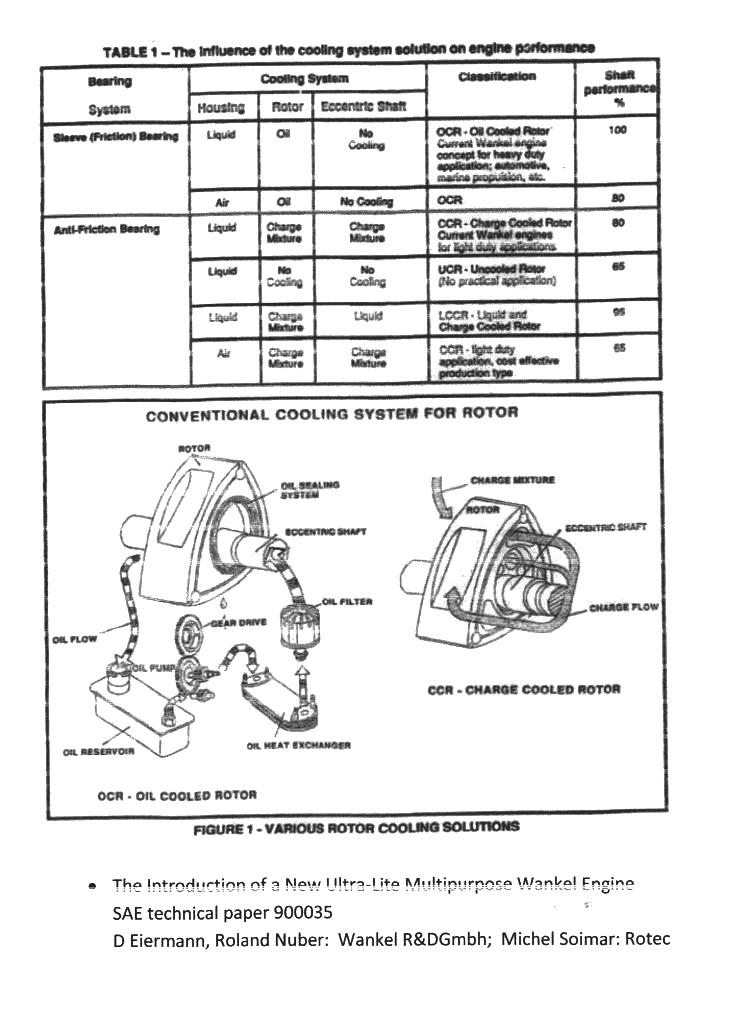 RE Cooling Ways vs Engine Performance SAE tech paper 900035.jpg
99.14 KB
Download Attachment: 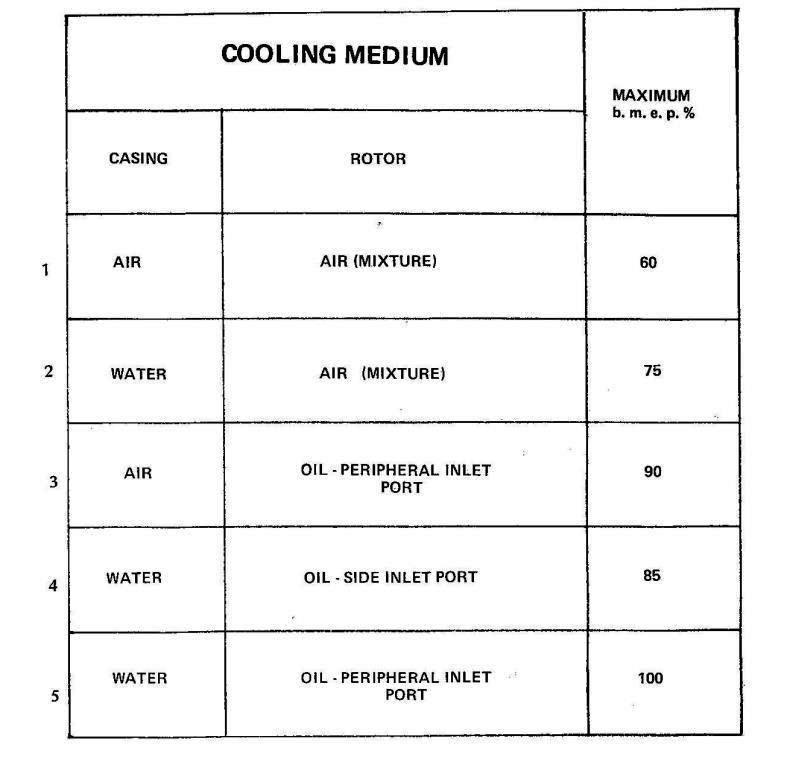 RCE bmep percent vs Cooling way E McGovern.jpg
52.66 KB
Download Attachment: 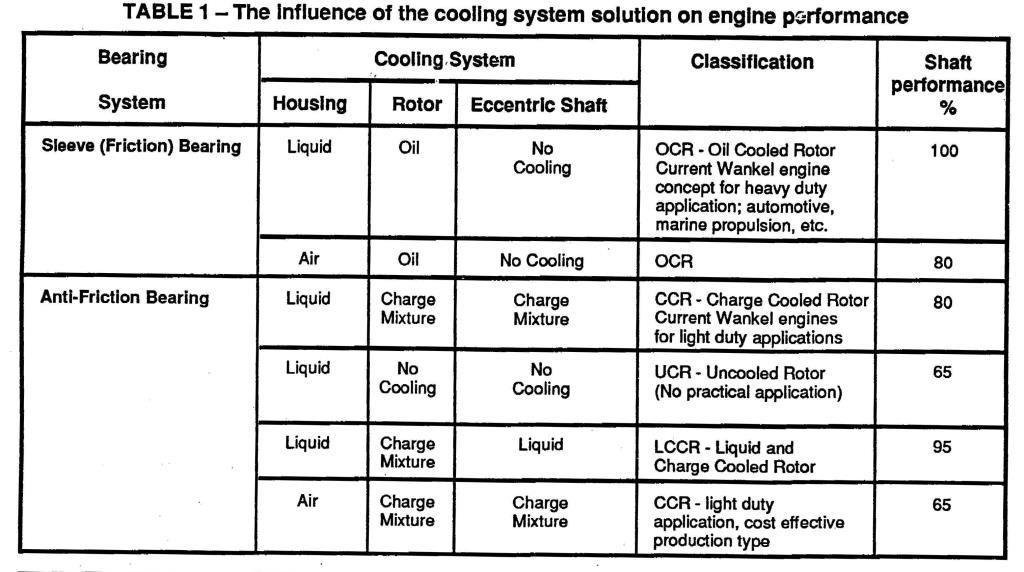 Wankel RCE cooling systems & performances.jpg
99.94 KB
Download Attachment: 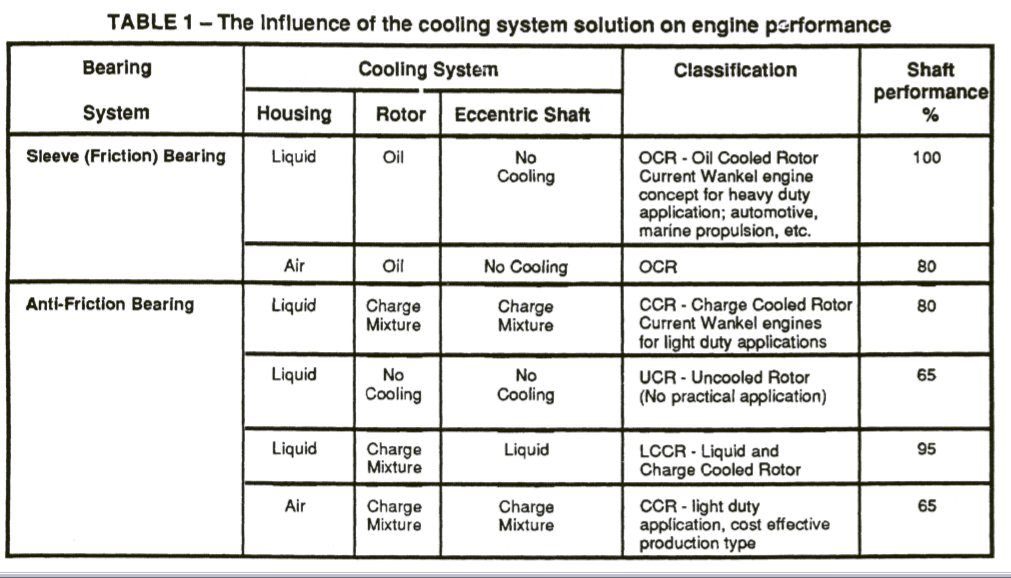 charge-cooled-V-oil-cooled a.jpg
105.26 KB
Download Attachment: 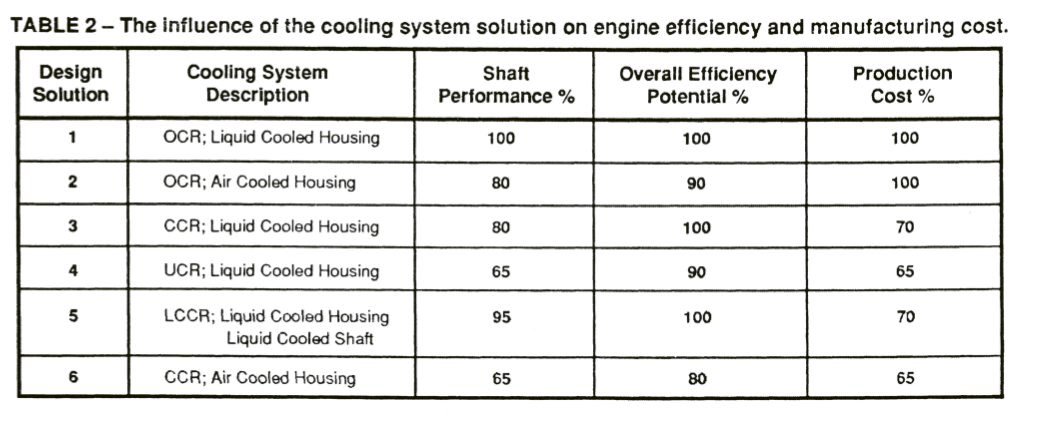 charge-cooled-V-oil-cooled b.jpg
78.93 KB
Download Attachment: 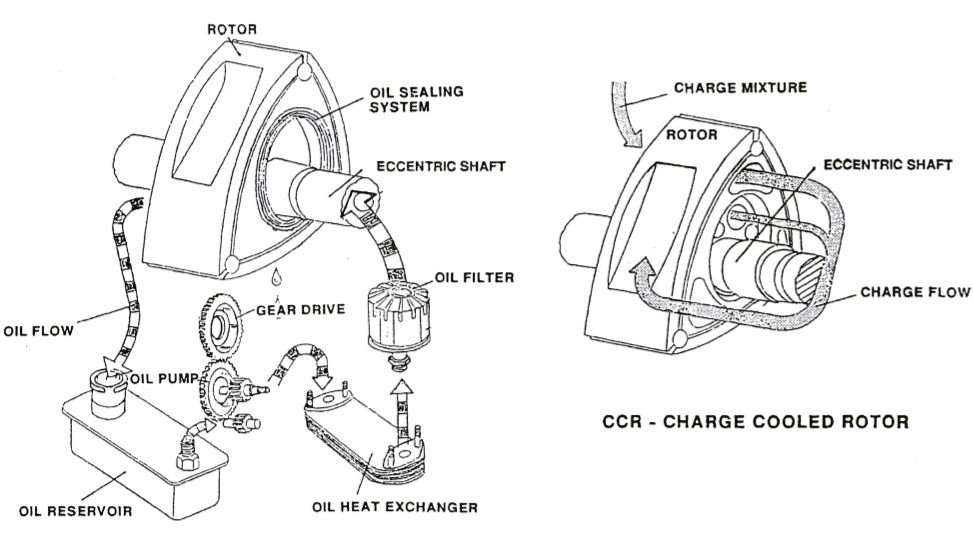 charge-cooled-V-oil-cooled fl.jpg
78.56 KB
Download Attachment: 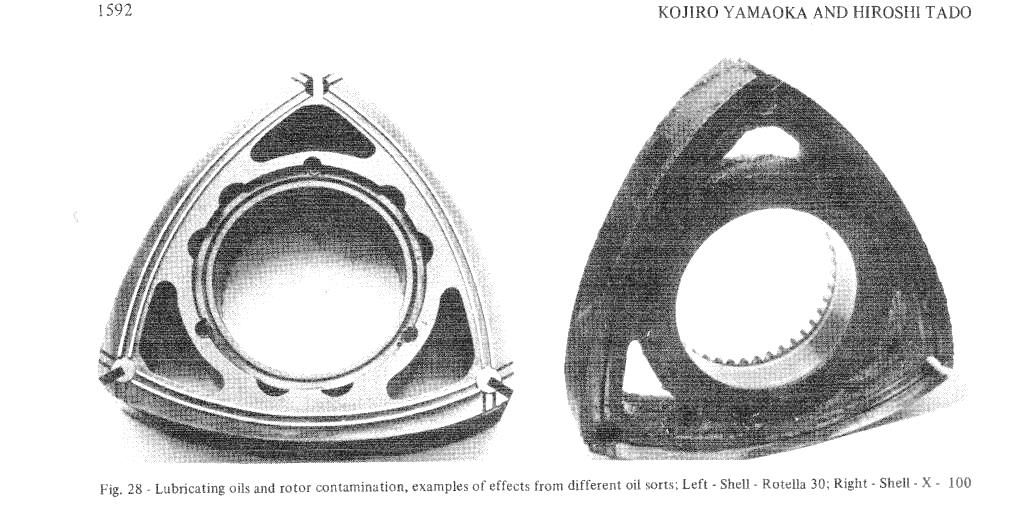 Charge Cooled Rotor -Shell Rotella 30 vs Shell X-100 -SAE paper 720466 Yanmar Diesel comp.jpg
90.64 KB
Aaron's Homepage Forum : http://www.aaroncake.net/forum/
© 1995-2020 AARONCAKE.NET