| anonymous |
Video Stabilizer/MacroVision Removal |
Monday, May 25, 2015 9:34:04 PM |
| Re s-video question - easy, insert the circuit in the luminance line and connect the ground and chrominance lines straight through. |
| glocktastic |
Video Stabilizer/MacroVision Removal |
Monday, April 12, 2010 7:35:45 PM |
| I don't know much about this but have a look here:
http://www.kolumbus.fi/pami1/macrovision/
The PDF of a circuit-diagram is shown at the link "Schematic Diagram A4 PDF"
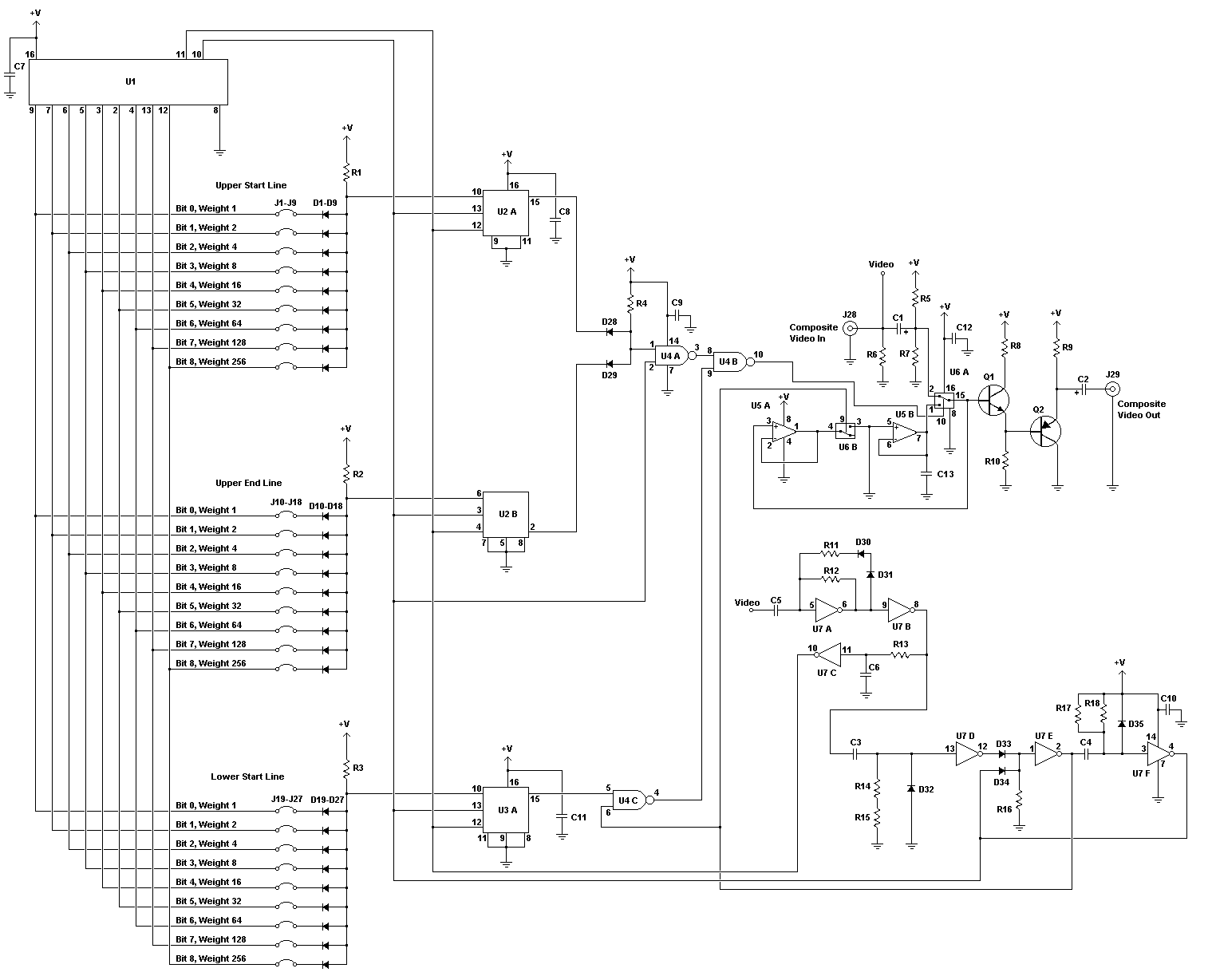
The circuit-diagram on this page appears to have a mistake because it shows pin 5 of U5B grounded. Instead, it should have a 220nF capacitor to ground. |
| anonymous |
Video Stabilizer/MacroVision Removal |
Saturday, March 20, 2010 4:12:54 PM |
| Has anyone actually built this and got it working? If so what changes are necessary?
I also have the concern Ken expressed. |
| anonymous |
Video Stabilizer/MacroVision Removal |
Wednesday, April 08, 2009 7:45:31 PM |
| U5 appears to be a keyed clamp, with a mistake. I think C13 should be connected to pin 5, not pins 6 and 7, and the ground connection to pin 5 deleted. When the switch U6B is closed, a charge is then placed on the capacitor at U5 pin 5, and the voltage follower U5B makes that voltage available at U5 pin 7. |
| ken |
Video Stabilizer/MacroVision Removal |
Wednesday, October 08, 2008 11:03:04 AM |
| I wonder how this is supposed to work at all with U5 pin 5 grounded? any signal from U5a when the analog switch is closed will just go to ground.??? |
| edmoon |
Video Stabilizer/MacroVision Removal |
Tuesday, September 09, 2008 9:53:49 PM |
| I wonder how this might be made to work with s-video. |
| anonymanonymousous |
Video Stabilizer/MacroVision Removal |
Sunday, October 14, 2007 11:18:30 PM |
| I have a TV/VCR combo and the VCR quit, but the TV works fine. you know what happens when you connect another VCR to a combo, it treats it like another VCR, this circuit should solve the problem. I cant wait to get it built, thks. |
| karthik |
Video Stabilizer/MacroVision Removal |
Wednesday, July 18, 2007 8:11:19 AM |
| super |
| anonymous |
Video Stabilizer/MacroVision Removal |
Tuesday, July 17, 2007 3:01:14 AM |
| i love it!!! wohooo |
| Anthony .I.Noumado |
Video Stabilizer/MacroVision Removal |
Wednesday, April 25, 2007 4:12:52 PM |
| how was this made i want to know more. |